

Do you know who Morton Deutsch was? A Bronx native, he became one of the most prominent social psychologists and conflict resolution researchers of the 20th century. In 2002, he was recognized as one of the 63 most cited psychologists of the past century. Let us explore one of his famous quotes:
“We cannot conduct real experiments on large-scale social events. But we can grasp the conceptual similarity between the large and the small, just as astronomers do between planets and Newton’s apple. … Thus, we can understand and predict large-scale social processes and influence them.”
This article, featured on bronxski.com takes a closer look at Morton Deutsch’s groundbreaking contributions to the study of the human mind.
Childhood and Youth
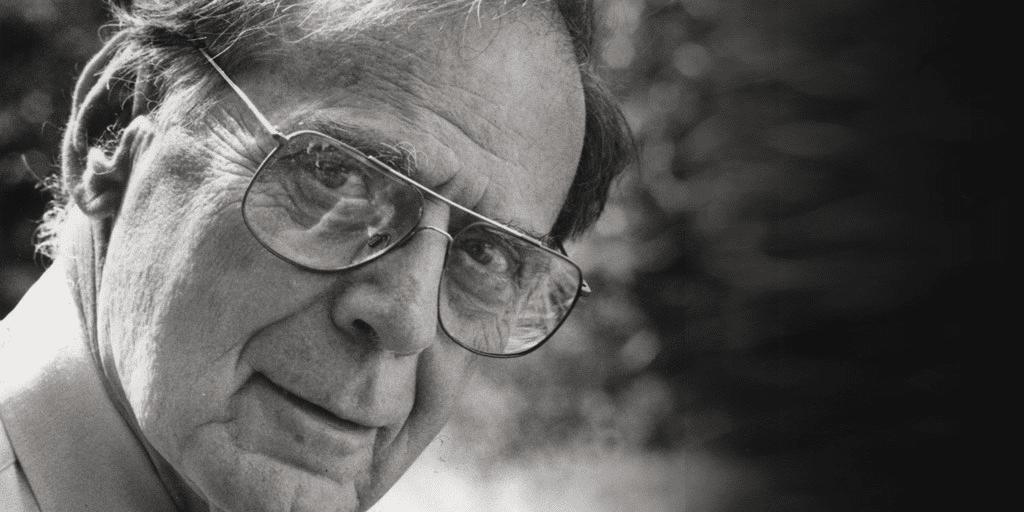
According to peace-ed-campaign, Morton Deutsch was born on February 4, 1920, in the Bronx, New York, into a large family of Polish Jewish immigrants, Charles and Ida Deutsch. He was the fourth child in a time marked by the aftermath of World War I, the onset of Prohibition in the United States, and the looming Great Depression. His childhood was challenging and filled with hardship, both at home and at school, where he often found himself at the bottom of social hierarchies.
In an interview in the early 21st century, Deutsch remarked:
“I was always concerned about the underdogs and those who were stepped on.”
Despite the difficulties of the 1930s, he remained optimistic and, like many Jewish children of the time, had an unrelenting desire for education and self-improvement.
Education
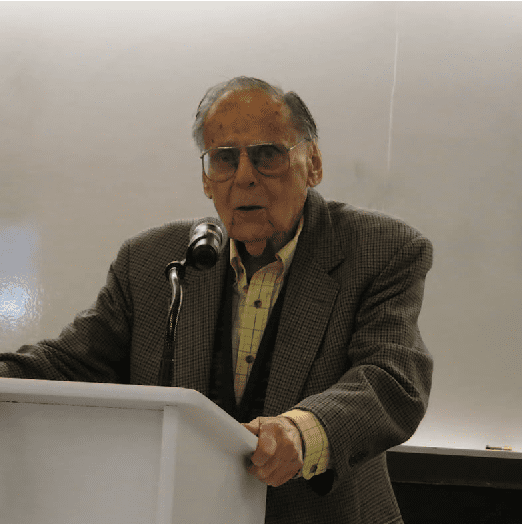
By the age of 15, Morton Deutsch had enrolled at the City College of New York, an institution where students and faculty were highly politicized. He recalled:
“In the cafeteria, one corner had people representing the First International, another the Second, then the Third and Fourth.”
This environment fostered lively discussions about Marxist ideologies and critical thinking. While initially interested in psychiatry, Deutsch later shifted his focus to psychology, reportedly due to his discomfort with dissecting a guinea pig during a biology class in his final year.
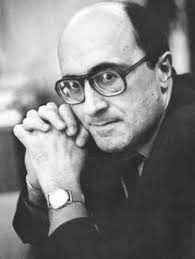
He graduated with a bachelor’s degree and later earned a master’s degree from the University of Pennsylvania in 1940. During this period, he interned at institutions for the mentally disabled, juvenile offenders, and mentally ill children and adults, gaining practical experience and refining his ideas in psychology.
War and Post-War Activities
In 1941, with the outbreak of World War II, Deutsch joined the U.S. Army Air Forces as a psychologist and later as a pilot, flying 30 missions over Germany and earning several awards.
After the war, he pursued further education at the Massachusetts Institute of Technology (MIT), studying under the guidance of Kurt Lewin. In 1948, Deutsch earned a PhD in philosophy with a dissertation on the psychological effects and productivity of cooperative and competitive groups. His research coincided with the establishment of the United Nations and the evolving dynamics of cooperation and competition within its Security Council. Reflecting on this period, Deutsch said:
“Shortly before I resumed my graduate studies, the atomic bombings of Hiroshima and Nagasaki had occurred. I was acutely aware of the dangers posed by nuclear weapons and the newly established UN Security Council’s potential for cooperation or conflict.”
Scientific Achievements and Contributions
Throughout his life, Morton Deutsch introduced numerous groundbreaking ideas, including:
- Cooperative Learning: Deutsch demonstrated that people who are rewarded for collaboration tend to form stronger interpersonal bonds, learn more effectively, and maintain better relationships.
- Shared Goals: He showed that success and group dynamics hinge on individuals perceiving shared goals and mutual potential.
- Interpersonal Relations: Based on his dissertation, Deutsch identified three key factors influencing human relationships: how one person’s actions satisfy another’s needs, an individual’s propensity to evaluate themselves and others, and their willingness to accept influence.
- Housing and Racial Relations: Deutsch studied interracial public housing projects in New York and Newark, concluding that segregated housing fosters division and is undemocratic, leading to a shift away from such practices.
- Overcoming Stereotypes: He examined group tensions and racial attitudes within Jewish communities and worked to dismantle societal stereotypes about various religious and racial groups.
- Negotiation Simulations: Deutsch created simulations showing that the presence of weapons during negotiations tempts parties to use them, resulting in futile agreements focused on dominance rather than resolution.
Additionally, Deutsch advised the U.S. government during critical events like the Berlin Crisis and Poland’s political transition in 1989.
Later Career
In 1963, Deutsch established his own psychological laboratory to study the factors influencing competition and cooperation in negotiations. In 1986, he founded the International Center for Cooperation and Conflict Resolution (ICCCR), which provides training in conflict resolution and mediation for foundation leaders, teachers, and law enforcement officials.
Over his lifetime, Deutsch authored 10 books on conflict theory, social psychology, and human interaction. He received numerous awards and was an honorary member of prestigious academic institutions, including the World Dignity University and the Global Advisory Board for the Human Dignity and Humiliation Studies organization.
Legacy
Morton Deutsch remained optimistic about human nature throughout his life, stating:
“Violence and war are human potentials, but they are not inevitable. Unfortunately, weapons have become far more destructive, so it is essential that we control them.”
He advocated for finding commonalities among people, such as shared history, unique neighborhoods, our planet, the universe, and common challenges. He believed impatience among those striving for a better world was often the greatest obstacle to achieving peace.
From a Polish Jewish immigrant family, Morton Deutsch grew into one of the most influential American social psychologists, renowned for his contributions to conflict resolution and intergroup relations. His work continues to guide understanding and cooperation in human interactions.