

There are many famous personalities in the history of the Bronx who have influenced its development. There are even more famous people who are somehow connected with this large urban borough. In this article, bronxski.com tells about the outstanding son of the American nation, Roscoe C. Brown Jr., whose life is connected with the Bronx.
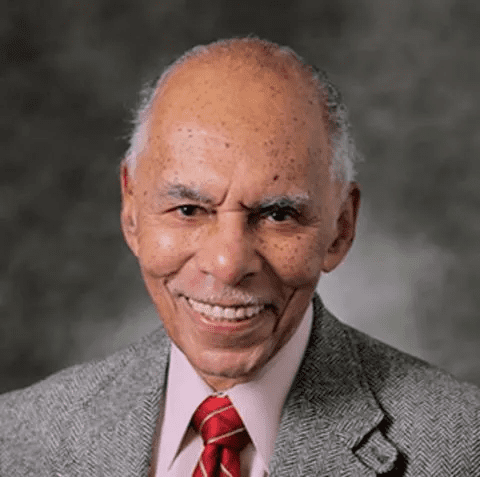
Parents, childhood and education
According to nytimes, a man named Roscoe Conkling Brown Jr. was born in the first days of spring 1922, namely on March 9. He was born in Washington. His parents were educated people. His father, George, was a dentist and worked in the Public Health Service and in the Federal Council of Negro Affairs under US President Franklin D. Roosevelt. This institution was still secretly called the ‘black office’ to emphasize who was working there and what issues these people solved. The father was named George Brown. He changed his name to Roscoe Conkling Brown to perpetuate the memory of the US senator who defended the rights of black people in the country.
The mother of Roscoe Jr. (that was the name of the son) was Vivian Kemp, who worked as a school teacher.
When he grew up, he was enrolled in Dunbar High School. After watching Charles Lindbergh’s film The Spirit of St. Louis, he decided to become a pilot. This is how a chance affects a person’s life. Roscoe C. Brown Jr. was enrolled in the Smithsonian Institution. In 1943, he received a bachelor’s degree from Springfield College in Massachusetts.
Tuskegee pilots
There was racial segregation in the USA in the 20th century. The state policy of the country and the attitude of society towards African Americans were negative. The state machine did everything possible to separate white and black people in education, housing, transportation, being in public places and visiting shops.
The situation began to change after World War II. However, the first change was the permission for African Americans to become military pilots. On April 3, 1939, Congress passed a bill allocating funds for the training of African American pilots. The money was planned to be invested in civilian flight schools that would be willing to train black people. The funds allocated for aviation training created new opportunities for pilots. In 1941, the Ministry of Defense and the Air Force created the first black unit, which was called the 99th Flying Training Squadron.
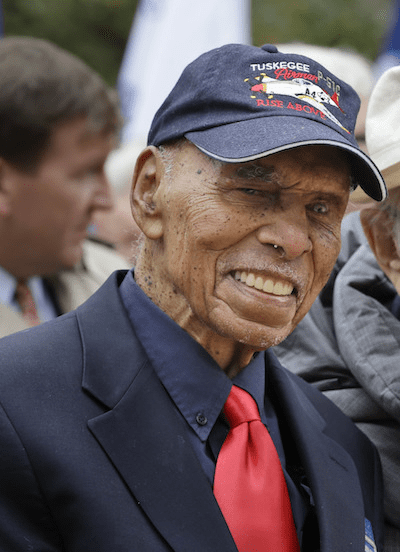
All the pilots who began their combat career in this unit received flight training at various airfields and schools. The airports of Greeley Field, Kennedy Field, Moton Field, Shorter Field and the Tuskegee Military Airfield should be mentioned. Some of those who received their education at the Tuskegee Institute (now Tuskegee University), located in the town of Tuskegee, Alabama, from that time on called themselves Tuskegee pilots. Among them was Roscoe C. Brown Jr.
World War II in the life of Roscoe Jr.
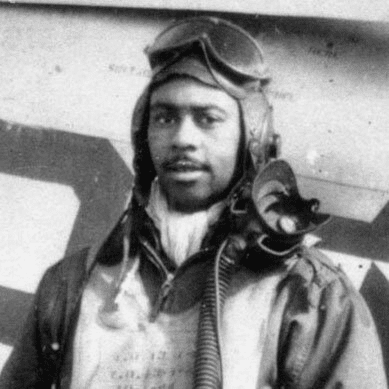
The war started. For the United States, it began on December 7, 1941, with the Japanese attack on Pearl Harbor. The war became another reason why the young man wanted to learn to fly. However, there was a policy of restricting access to certain positions for black people in the US. Their training and work in the aviation were not very favorably viewed. He had to work hard to join the ranks of military pilots. Roscoe C. Brown Jr. graduated from Tuskegee School on March 12, 1944, as a member of class 44-C-SE. Then, he served in the U.S. Army Air Forces in Europe. During the war, he served as a flight leader and operations officer.
On March 15, 1945, Brown Jr. took part in the longest U.S. Air Force mission of World War II. He flew 1,500 miles from southern Italy to Berlin to meet with a group of German aircraft.
On March 24, during a flight to Berlin, he managed to shoot down a German jet fighter Me 262. A few days later, he succeeded again. It was a Focke-Wulf 190 fighter. It was the first time that this aircraft was shot down by an air jet and also the first time that a German aircraft was shot down by an African American. For these victories, he was awarded the Distinguished Flying Cross. During the war, Roscoe C. Brown Jr. became a captain. He flew 68 combat missions as a fighter squadron commander. As he later said, ‘fighter pilots were like athletes, and I was a good pilot’.
Postwar activities
The war was over. Roscoe C. Brown Jr. continued his studies and received his master’s and doctorate degrees at New York University. He held many government positions, including a consultant to the National Park Service and a city park officer for the Gateway National Recreation Area (Bronx). He also headed the New York City University’s Institute of Afro-American Affairs. There, he worked as a professor. He also had the opportunity to work as president of the Bronx Community College (from 1977 to 1993) and head of the Center for Educational Policy at the City University of New York.
Political life
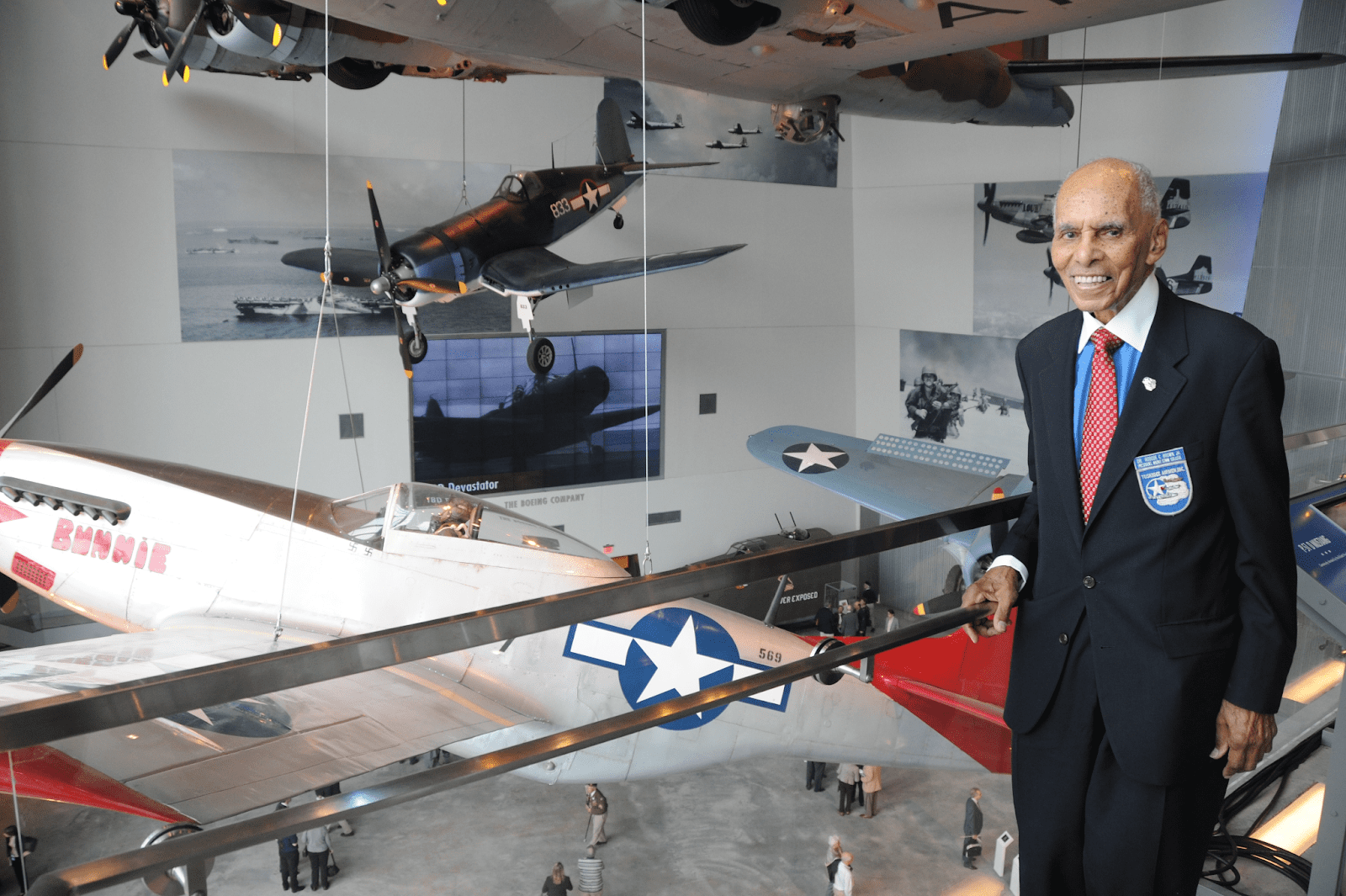
In addition to his activities in the educational sphere, Roscoe C. Brown Jr. played an important role in the political life of the city. He acted as an advisor to the city government on black affairs. He was also the head of a group of 100 men, which was formed in 1963 and fought to improve the lives of black people. Furthermore, he never applied for high positions in government offices. Of all the races in which he had to participate, there were marathons (he ran 9 over several years).
Thanks to Roscoe C. Brown Jr., Mayor Dinkins came to power in 1989. He supported someone who could fight racism in the city.
In 1987, the murderer of four black teenagers on the subway was acquitted. Dr. Brown said that the climate in which this decision was made by a white or a black jury was a manifestation of racism and fear of black young people. He believed that the best challenge that people could take on was to find jobs for other young people.
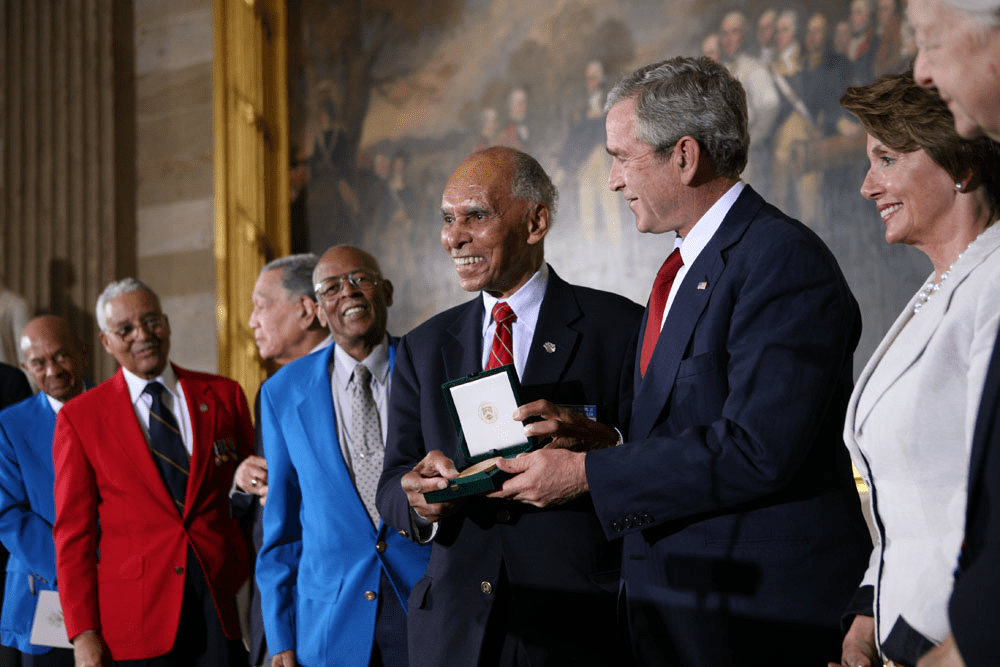
In 2007, he and the other five surviving Tuskegee pilots were awarded the Congressional Gold Medal.
Personal life
He was married to a woman named Laura Jones. They had 3 children: a son, Donald, and daughters, Doris Bodine and Diane McDougall.
He was a lifelong Jets and Mets fan.
Death
Dr. Brown died on July 2, 2016 at Montefiore Medical Center. His death came after he fell and broke his hip. He had previously been fitted with a pacemaker. His doctor was delighted with his health. He said he was in excellent shape and health. He was called a voice of reason amid the racial unrest in New York in the 1970s and 1980s. He was 94. Mayor Bill de Blasio ordered on Tuesday that the city and state flags be flown at half-staff in honor of Dr. Brown until sunset on July 9.
Roscoe Conkling Brown Jr. lived a worthy life. On his path, he had a successful service in aviation. He managed to shoot down several German planes. Then, he continued his studies and work in the city’s educational institutions. His main mission was the fight against racism, which he never abandoned or retreated from.