

Are you familiar with terms like slipmat, DJ, breakdance, Quick Mix Theory, vinyl, and rapper? Most likely, yes—even if you know little about music. These are all part of the subculture formed around hip-hop, rap, and DJing. One of the most famous figures in this movement during the 1970s and 1980s was Joseph Robert Saddler, known as Grandmaster Flash from the Bronx. The publication bronxski.com shares more about his story.
First Steps to Success
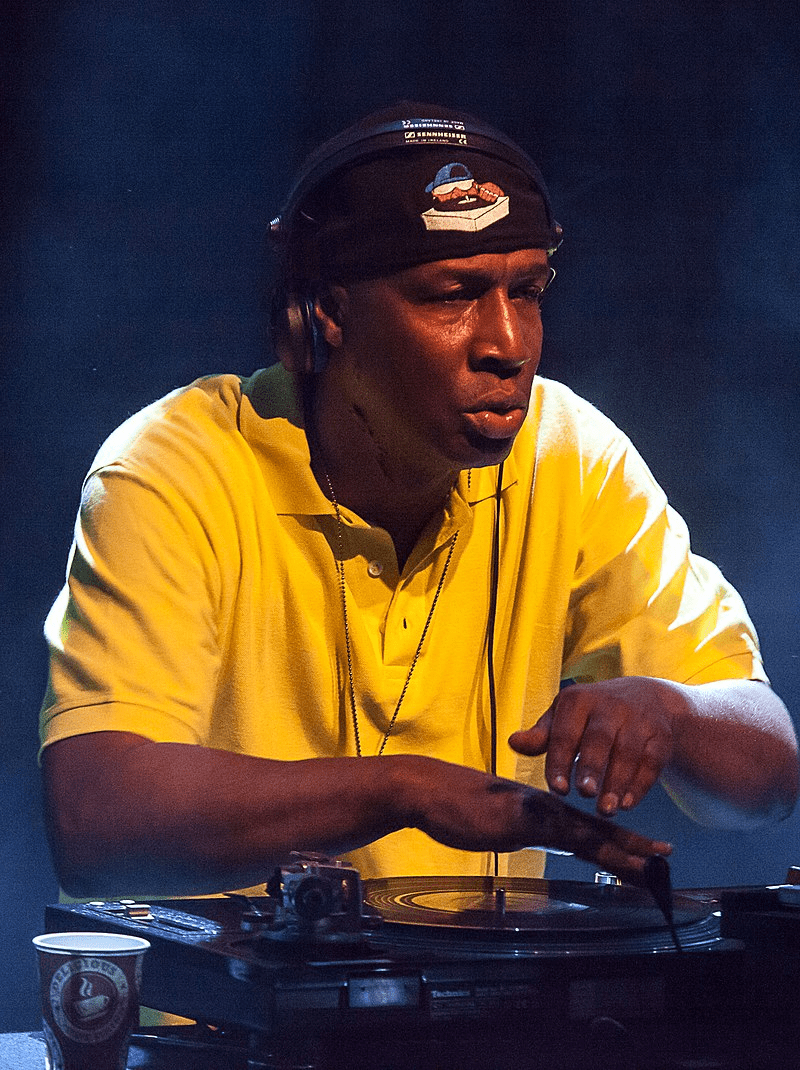
Joseph Robert Saddler was born on January 1, 1958, as reported by washingtonpost.com. His family, like many Bronx residents after World War II, were immigrants from the Caribbean (specifically Barbados), Latin America, and Africa. The future music producer and DJ grew up in the Bronx, where he attended Samuel Gompers High School and later a state vocational school. The latter provided him with technical knowledge, as he trained to become an electronics repair technician—a skill that later supported his musical pursuits.
Equally important in shaping his passion for music were his parents, particularly his father, a devoted fan of Caribbean and African-American music. Saddler was naturally drawn to his father’s vinyl collection but was forbidden to touch it. This prohibition only heightened his interest. Saddler recalled opening the cabinet to admire the records but knowing he would be punished if he touched them. His fascination with DJing was born out of this admiration for his father’s collection. His mother also played a key role, encouraging him to study electronics.
These influences fueled his passion, and soon after school, he began attending early gatherings and parties with New York DJs like DJ Kool Herc and Disco King Mario.
Innovations by Joseph Robert Saddler
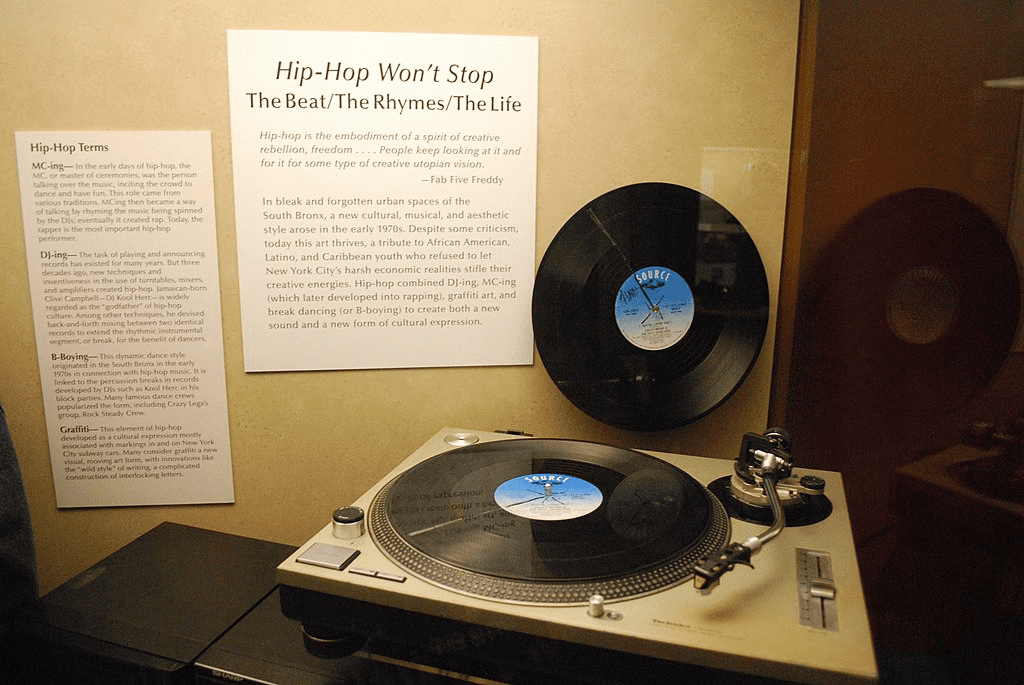
Studying others’ methods and creating one’s own innovations are entirely different things, and Grandmaster Flash quickly realized this. He recounted that his mother and sister often hosted parties. During these events, he noticed that some tracks excited the crowd so much that they wanted to hear them repeatedly. But how could he replay just the best part of a record? This challenge inspired young Joseph Robert Saddler to innovate.
First, he spent hours observing other DJs. Then he studied the stylus, the part of a record player responsible for reading grooves. His next challenge was to find a needle that could remain inside the groove when moved counterclockwise along the vinyl. He successfully solved this problem.
Another challenge involved the rubber mat included with turntables. The mat caused friction, so he removed it. However, the exposed steel plate beneath could damage the vinyl if touched by the needle. His mother, a seamstress, provided a solution. With her guidance, Saddler experimented with fabrics and chose felt. He purchased the material, cut it into disc-shaped pieces, and treated them with starch spray to smooth them out. These pieces became slipmats. With the needle and slipmat ready, he needed the right turntable.
The Slipmat
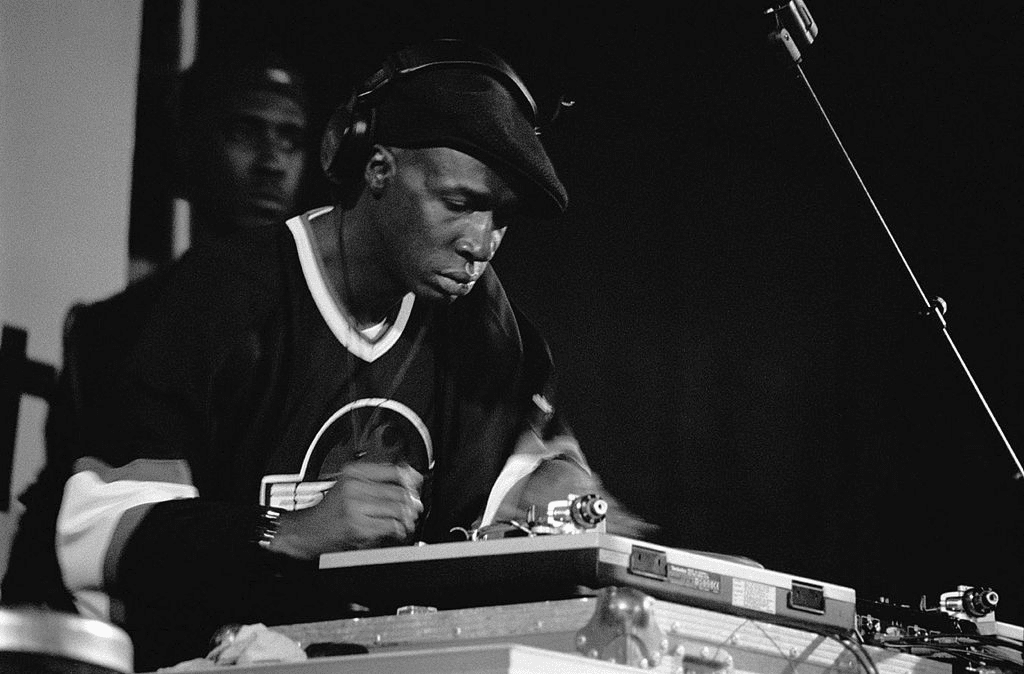
A slipmat is a piece of fabric, ideally slippery, placed on a turntable instead of the standard rubber mat. It allows DJs to move the vinyl record while the platter underneath continues spinning. This technique is essential for holding a record stationary, making small adjustments, mixing new rhythms, and scratching. Sometimes, records are used as decorative elements—though only when they’re not on the turntable.

Finding the Right Turntable
After solving the needle and slipmat challenges, Saddler’s next hurdle was finding the perfect turntable. He scoured junkyards for discarded stereo equipment to test its potential. He prioritized torque—the turntable’s ability to reach full speed within one rotation from a standstill. This was crucial for manipulating the record while moving the needle counterclockwise along its groove.
After examining dozens of turntables, Saddler finally discovered one on Hunts Point Avenue in the Bronx. He stumbled upon an unfamiliar electronics store displaying a gray, unimpressive box-shaped turntable. The storekeeper allowed him to test it, and Saddler realized it had the perfect torque. The turntable, a Technics SL-23 model, reached full speed in a quarter turn. He purchased two for $150 after saving up from his job as a courier. Soon, this model became a must-have for DJs.
Equipped with the right tools—needles, slipmats, music records, a mixer, and turntables—Grandmaster Flash created a 10-second drum loop that played for 10 minutes. This marked the beginning of rap.
Becoming Grandmaster Flash
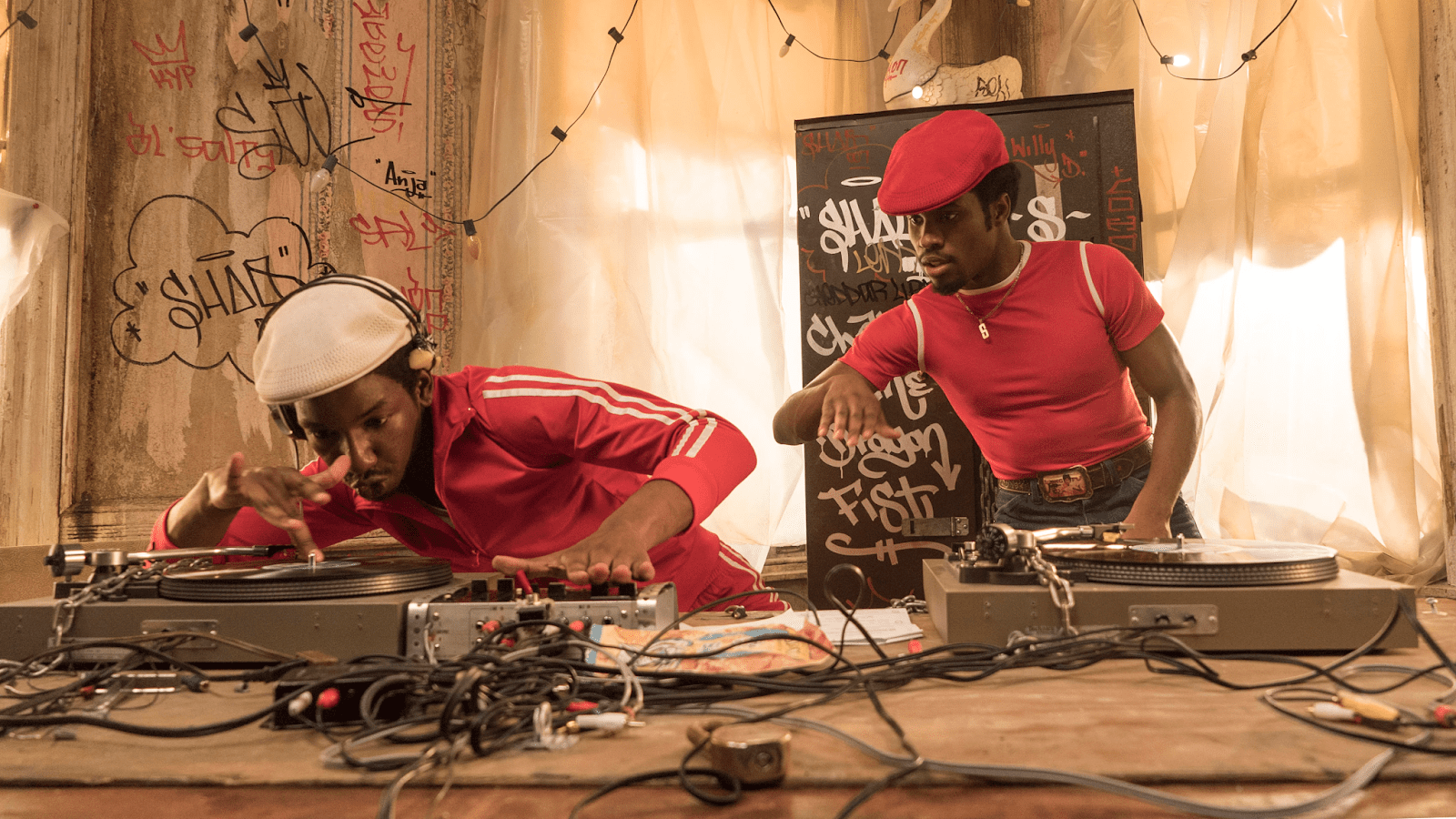
In the 1970s and 1980s, Bruce Lee dominated movie screens and cultural imagination. He was a grandmaster of martial arts—a title symbolizing mastery. In 1972, a fan watching Saddler perform at the turntable compared his movements to those of a martial arts grandmaster, mimicking Bruce Lee’s iconic moves. From that moment on, Joseph Robert Saddler became Grandmaster Flash.
Career
Grandmaster Flash collaborated with rappers like Kurtis Blow and Lovebug Starski while hosting parties. He then formed his own group, coining the term “hip-hop.” The phrase originated as a sarcastic reference to the rhythmic cadence of U.S. military marches, linked to one of the group’s members. Starting in 1978, the group regularly performed at Disco Fever in the Bronx. In 1979, they signed a contract with Enjoy Records and released their first single, Superrappin.
In 1980, the group signed with Sugar Hill Records, producing numerous singles, embarking on tours, and releasing the film The Adventures of Grandmaster Flash on the Wheels of Steel. In 1999, during a performance, Flash collaborated with DJ Tomekk and Flavor Flav on the single 1, 2, 3, … Rhymes Galore, which remained in Germany’s Top 10 charts for 17 weeks.
The group disbanded in 2002 due to internal disagreements. Despite a decline in popularity, Grandmaster Flash continued performing, giving interviews, and sharing his expertise.
Grandmaster Flash’s contributions to the evolution of rap and hip-hop are undeniable. His innovations paved the way for successors to further develop this musical genre. Are you a fan of his work?