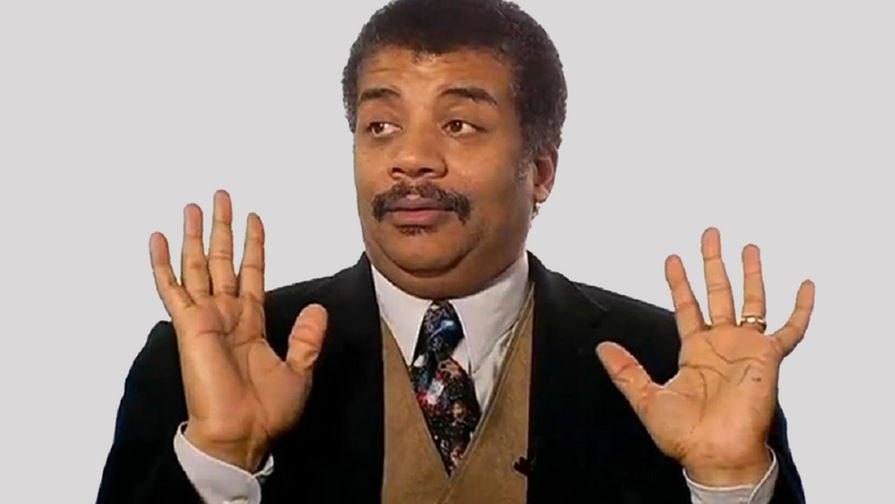

One of the most famous scientists in the U.S., Neil deGrasse Tyson distinguishes himself from his more serious colleagues with his ability to explain complex topics about the universe in a simple and captivating way. This has made him popular with both the scientific community and the general public. In addition to his research, Tyson leads an active media life: writing books, producing podcasts, and appearing on television shows. In this article, bronxski.com will tell the story of this notable figure in the science media landscape.
A Thirst for Knowledge
Tyson was born in Manhattan on October 5, 1958, but grew up in the Bronx. His mother, Sunchita, was a gerontologist, and his father, Cyril, was a sociologist. Neil’s interest in the stars began in childhood after a school trip to the Hayden Planetarium, which made a huge impression on him. He later took classes at the same planetarium, bought his own telescope, and began observing the sky from the roof of his apartment building. This hobby influenced his choice of school after he finished high school.
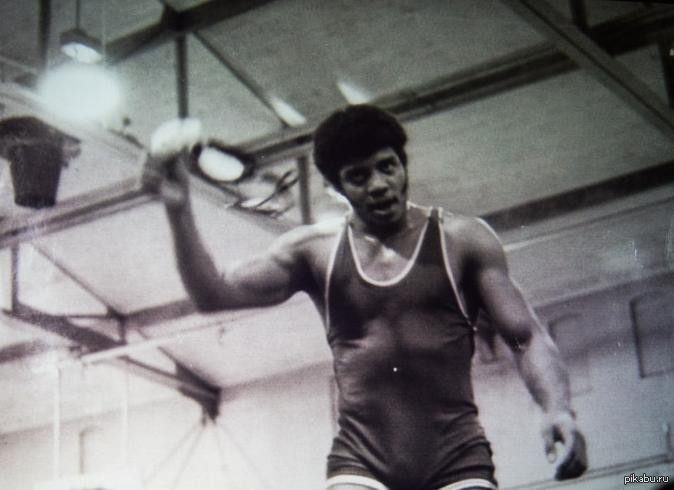
In 1976, Tyson graduated from the Bronx High School of Science, where he excelled not only in his studies but also in extracurriculars—he was the captain of the wrestling team and the editor-in-chief of the school’s physics journal. By the time he was 15, Neil was giving lectures on astronomy, earning a reputation among amateurs.
DeGrasse’s passionate fascination with science caught the attention of the renowned astronomer Carl Sagan, who even invited Tyson to study at Cornell University. However, Neil chose Harvard, where he earned his bachelor’s degree in physics in 1980. He then pursued graduate studies at the University of Texas, earning a master’s degree in astronomy, and later at Columbia University, where he earned his master’s and doctorate degrees in astrophysics in 1989 and 1991, respectively. After that, Tyson worked at Princeton before beginning his career at the Hayden Planetarium.
What Neil deGrasse Tyson Is Known For
To understand the full range of accomplishments and qualifications of this undoubtedly brilliant and talented man, let’s divide Neil deGrasse Tyson’s work into separate areas.
- Director of the Hayden Planetarium.
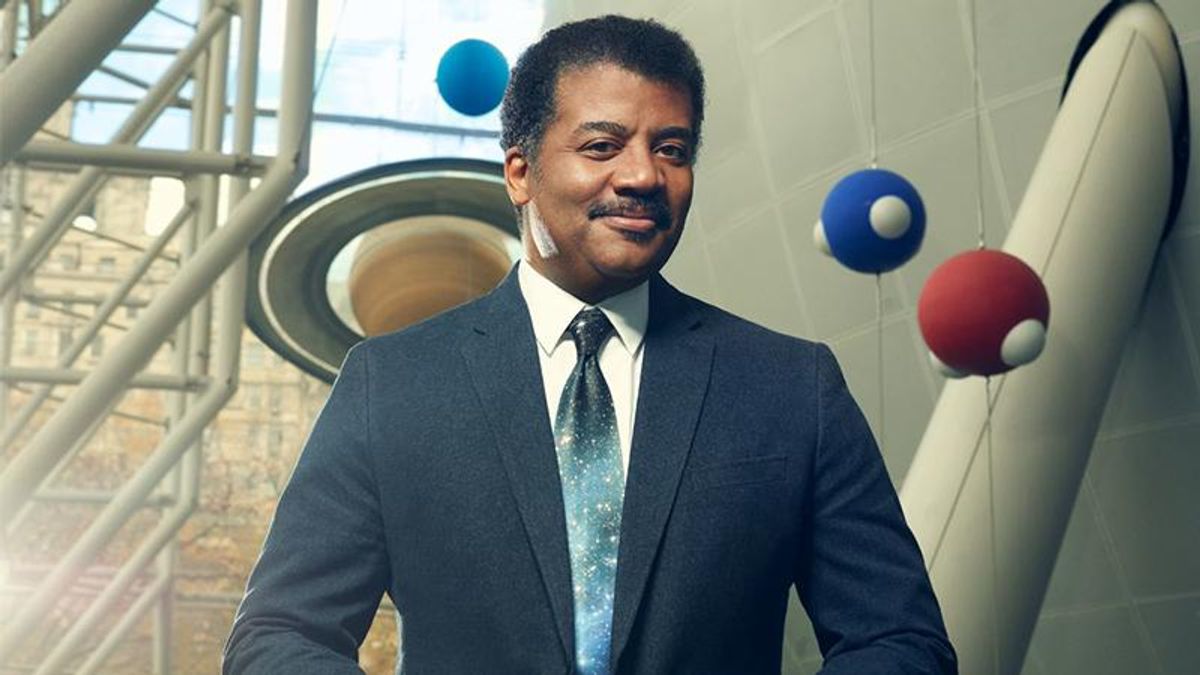
After becoming director of the Hayden Planetarium, Tyson played a key role in a massive reconstruction of the facility. He participated in the design and helped raise funds for the $210 million project, which was completed in 2000. The new planetarium became a state-of-the-art center for astronomy. One of Tyson’s controversial moves was the exclusion of Pluto from the main exhibit as a full-fledged planet, which caused outrage among some visitors. However, in 2006, the International Astronomical Union affirmed this position, officially classifying Pluto as a dwarf planet.
- Host of Science TV Shows.
From 2006 to 2011, Neil deGrasse Tyson hosted the TV show “NOVA ScienceNow,” where he made complex scientific topics accessible to a wide audience. He actively promoted scientific literacy, advocating for science to be interesting and understandable for everyone.
“One of my goals is to bring information about the universe down to Earth in a way that inspires the audience to want to know more and more,” he once said.
His work was also important for the representation of African Americans in the field of astrophysics.
- Adviser to the U.S. President.
In 2001, President George W. Bush appointed Tyson to a commission on the future of the U.S. aerospace industry. In 2004, Neil also served on a commission studying the future of U.S. space policy.
- Public Speaking and Media Appearances.
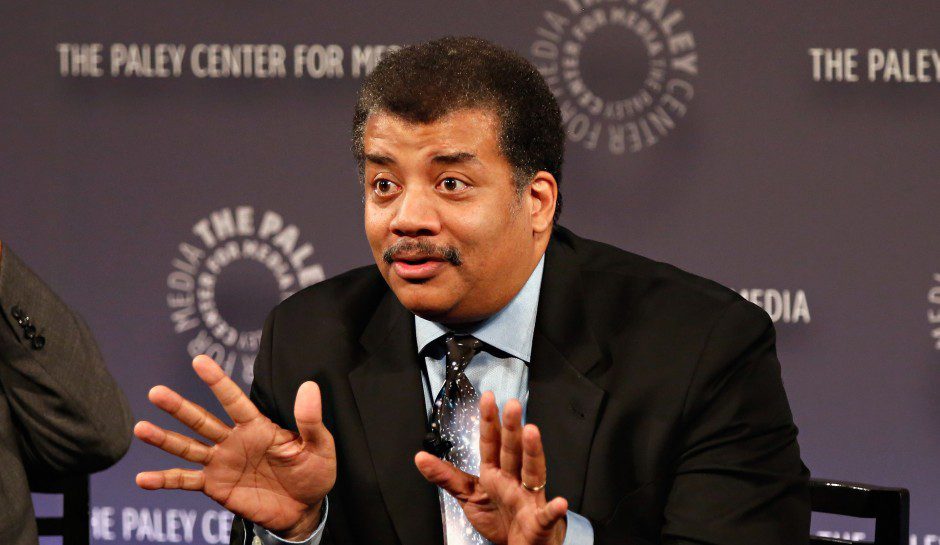
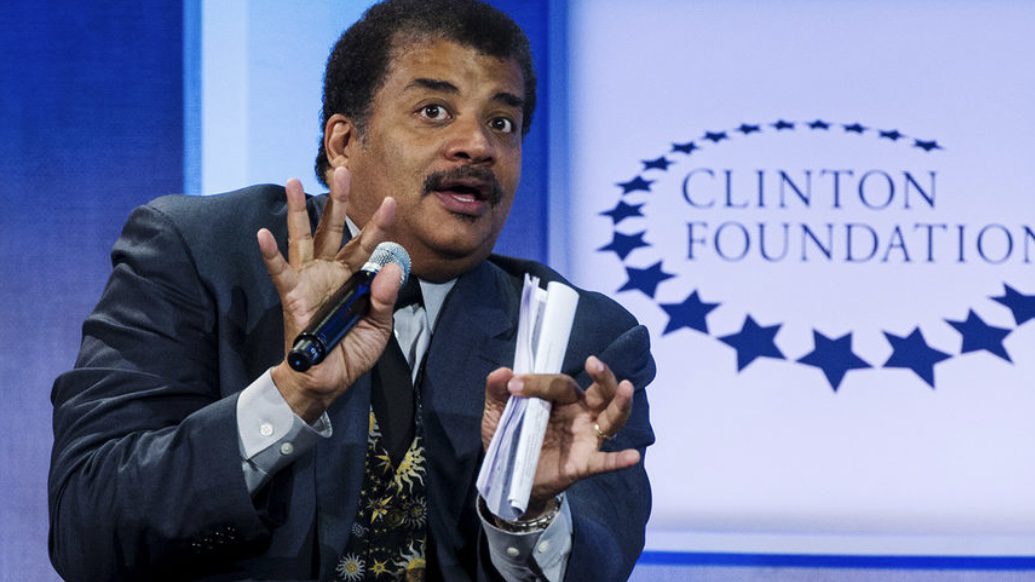
Tyson became a public science leader, frequently appearing in the media and on television. He was a guest on popular shows including “The Daily Show,” “The Colbert Report,” and “Real Time with Bill Maher.” He is known for his sense of humor and ability to captivate an audience.
- The ‘StarTalk’ Podcast and TV Show.
In 2009, Tyson launched the podcast “StarTalk Radio,” where he combined science with humor, thanks to his comedic co-hosts. The show’s success led to a TV version of “StarTalk” in 2015 and several themed spin-offs.
- Literary Work.
Tyson is the author of many popular science books. Among them are:
- Death by Black Hole (2006)
- The Pluto Files (2009)
- Astrophysics for People in a Hurry (2017)
- Letters from an Astrophysicist (2019)
- The ‘Cosmos’ TV Series.
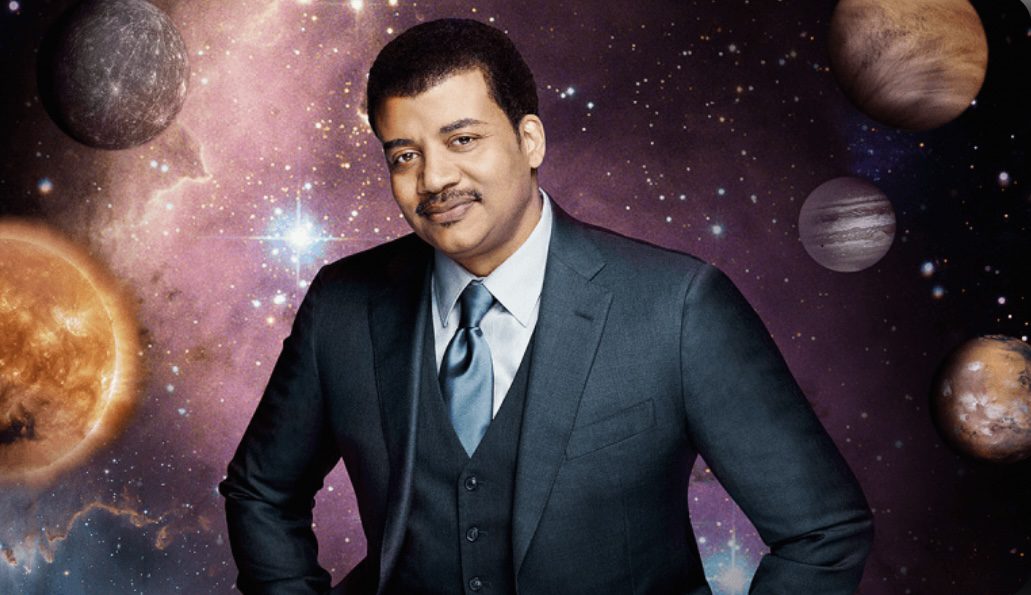
In 2014, Neil became the host and executive producer of a new popular science series, “Cosmos: A Spacetime Odyssey”—a continuation of Carl Sagan’s original series. The project introduced a new generation of viewers to the fundamentals of science and the history of the universe. The new 13-episode season aired on FOX and National Geographic and was conceived as a continuation of Sagan’s legacy. Tyson filmed in the same locations as Sagan and even worked with his widow, screenwriter Ann Druyan.
Personal Life and Sexual Misconduct Allegations
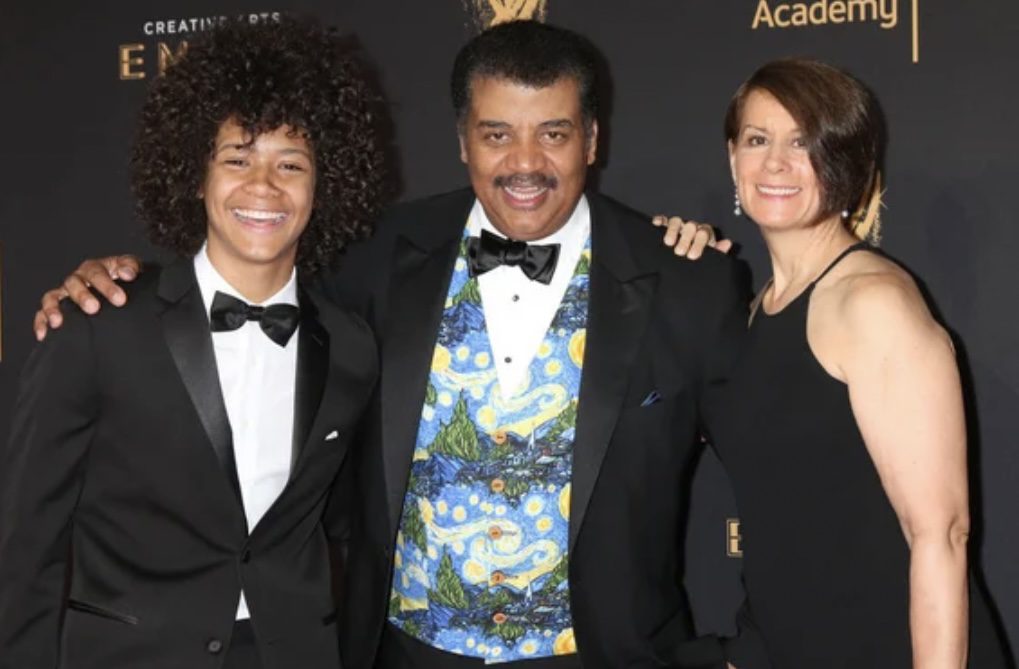
Neil deGrasse Tyson married Alice Young in 1988. She is a Ph.D. in mathematical physics. The couple resides in New York and has two children: a daughter, Miranda, and a son, Travis.
In late 2018, serious allegations of sexual misconduct were made against Tyson—three women came forward with claims of inappropriate behavior on his part. One of them accused Neil of rape, which she claimed occurred in 1984. In response, Tyson posted a detailed statement on Facebook, in which he denied the allegations and called for an open and impartial investigation.
Fox and National Geographic, which aired his shows “Cosmos” and “StarTalk,” conducted an internal investigation. In August 2019, they announced its conclusion and stated that they had found no evidence, and would therefore continue to work with Tyson and air his projects.
Although the scandal garnered widespread negative public attention, Tyson continues his professional work as a science popularizer and media figure.
Fun Facts About Neil deGrasse Tyson
- The Sexiest Astrophysicist on the Planet.
The magazine People once gave Tyson the unofficial but interesting title of “the sexiest astrophysicist.”
“Tyson, standing 6 feet 6 inches tall, is as passionate about terrestrial pleasures as he is about celestial ones, indulging his love for wine and fine dining while yielding to the gravitational pull of his wife, a Ph.D. in mathematical physics, to whom he had been married for 12 years,” the magazine wrote in 2000.
- He Corrected the Starry Sky in the Movie ‘Titanic’.
When James Cameron released “Titanic” in 1997, Tyson spotted an error: the night sky in one of the scenes was inaccurate. Neil couldn’t rest after seeing two mirrored sections of the sky pasted together on screen. He didn’t let it go and eventually succeeded in getting the stars to be arranged just as they would have appeared in 1912 for the film’s 2012 re-release. A true scientific perfectionist.
- He Helped Superman Find Krypton.
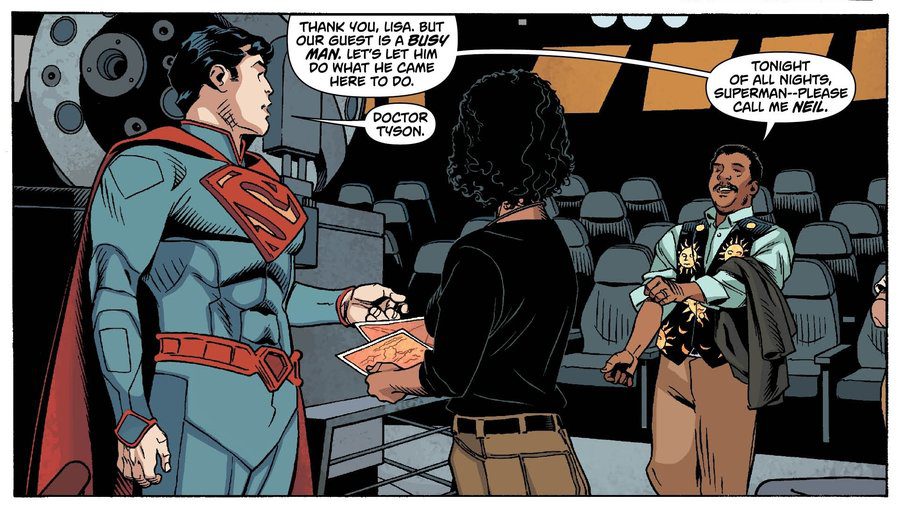
In 2012, Tyson appeared in the comic book “Action Comics #14,” where he helped Superman see his home planet. He suggested placing Krypton near the real star LHS 2520, all while adhering to scientific principles. Tyson even explained why the events that happened on Krypton 27 years ago would only now be visible from Earth—it was all because of the speed of light limitation.
- He Almost Became a Stripper Instead of an Astrophysicist.
During his student years, Tyson didn’t just study astronomy—he was also active in wrestling, rowing, and dancing. In 1985, he even won a national championship in Latin ballroom dancing. When money was tight and some of his acquaintances started moonlighting at clubs like the Chippendales, he seriously considered such a career. But after Neil went to a show and saw what it was all about, he decided he’d rather be a math tutor.
- He Became the Subject of a Popular Internet Meme.
One of Tyson’s television appearances, where he was passionately talking about Newton, spawned a legendary meme. An image of him with a signature hand gesture and rolled-back eyes was used to “troll” people who showed off on the internet. Tyson was initially puzzled by it but later recognized that this kind of fame also helps promote science.