

The doctor who performed the world’s first human heart transplant died in 2008 in New York. His name was Adrian Kantrowitz. More details about his life and activities in the field of experimental medicine, surgery and cardiology is told by bronxski.com.
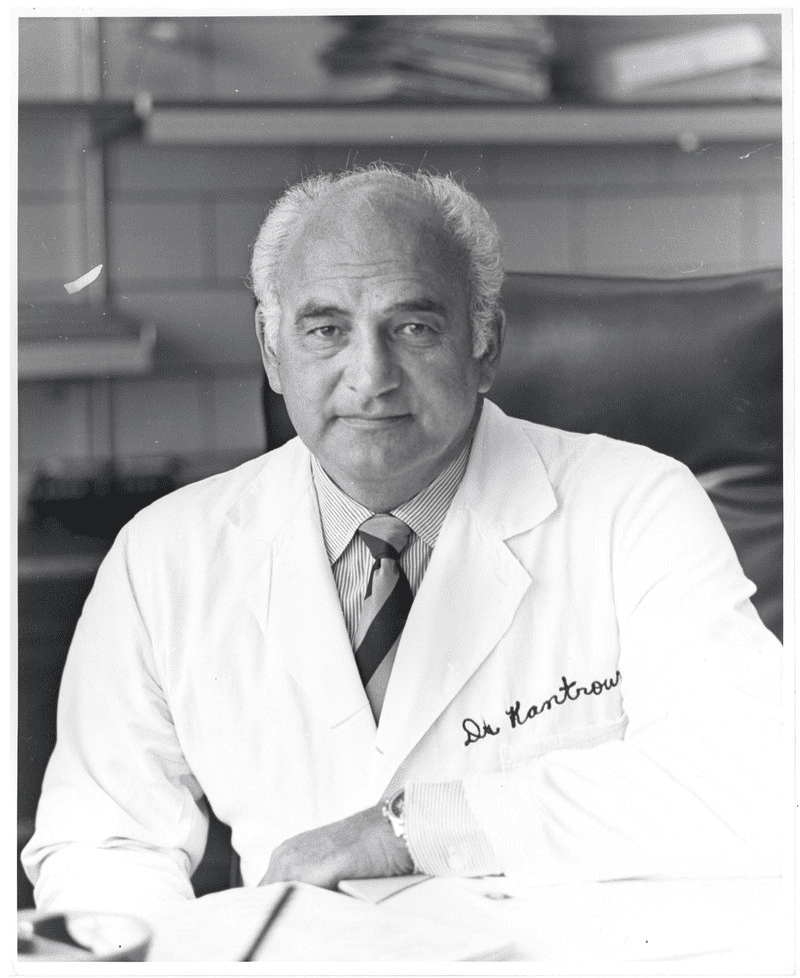
Early life and education
According to nytimes, the outstanding American surgeon was born on October 4, 1918 in the Bronx. World War I, in which the United States took the most active part, was ending. After the war, the country plunged into a period of decline in production. The authorities introduced Prohibition and the global economic crisis began later. Still, the United States became the most powerful country in the world. This had an impact on the population.
Adrian and his older brother Arthur grew up in the unstable conditions of the 1920s. However, their success was facilitated by the fact that their mother was a clothing designer and their father was the manager of a medical clinic in the Bronx. Therefore, the boys had the opportunity to study and had a carefree childhood. Thanks to his brother, Adrian was actively involved in creativity. At the age of three, he said that he wanted to be a doctor. Together with his brother, they built an electrocardiograph from old radio components. Can you imagine this? It happened in their childhood, in the 1920s. After some time, the brothers continued their work on an auxiliary device for the left ventricle.
The young man studied at New York University in 1940. He specialized in the study of mathematics. After that, Adrian continued his studies at the Long Island Medical College and received a medical degree. This happened in 1943. Such a quick completion of his studies was due to the need for doctors in the US Army during World War II. The education he received allowed him to do an internship at the Jewish Hospital of Brooklyn where he became interested in neurosurgery. At this time, he published an article ‘A Method of Holding Galea Hemostats in Craniotomies’. In this article, Adrian suggested a method of using a clamp when performing brain operations. The war continued. Therefore, Adrian had to work as a surgeon in the army for 2 years. Then, his career as a cardiac surgeon began.
Activities
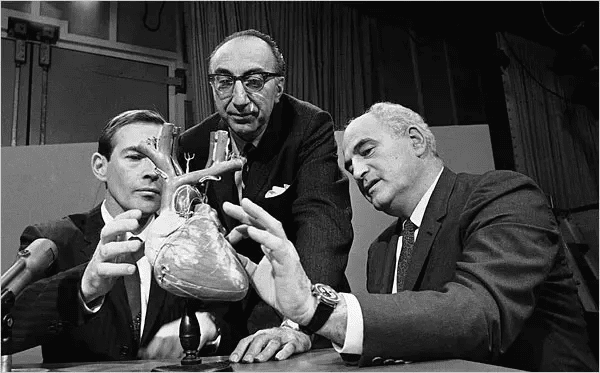
In 1947, Adrian worked as an assistant resident at Mount Sinai Hospital in Manhattan. In 1948-1955, Kantrowitz worked at Montefiore Hospital in the Bronx. First, he was an assistant resident. Then, he became a chief resident of surgery. In the following years, he began working at Maimonides Medical Center in Brooklyn. There, he led a group of researchers, engineers and cardiologists who were engaged in the development of devices to support the heart, lungs and bladder.
In 1970, Kantrowitz and his colleagues left Maimonides Hospital because they decided that a small community hospital in Brooklyn was not the kind of independent environment that would allow them to develop innovative cardiological methods. He moved his team of 25 people to Sinai Hospital in Detroit and continued to hone his skills in heart transplantation and designing devices to improve its performance. He also worked at Wayne State University School of Medicine.
He wrote more than 200 articles and professional scientific papers during his life.
Inventions
Adrian Kantrowitz managed to achieve a lot during his years of work. According to some sources, over 60 years, he invented and implemented more than 20 medical devices. Let’s list some of his ideas. First, there was his intervention in the care of terminally ill patients. He used surgical intervention and artificial devices.
In addition, Dr. Kantrowitz focused on not only replacing the heart but also improving its function with the help of technical devices. One of them was the ‘left ventricular assist device’ or LVAD. This allowed patients with severe heart failure to live a full life and not worry about the risk of sudden death.
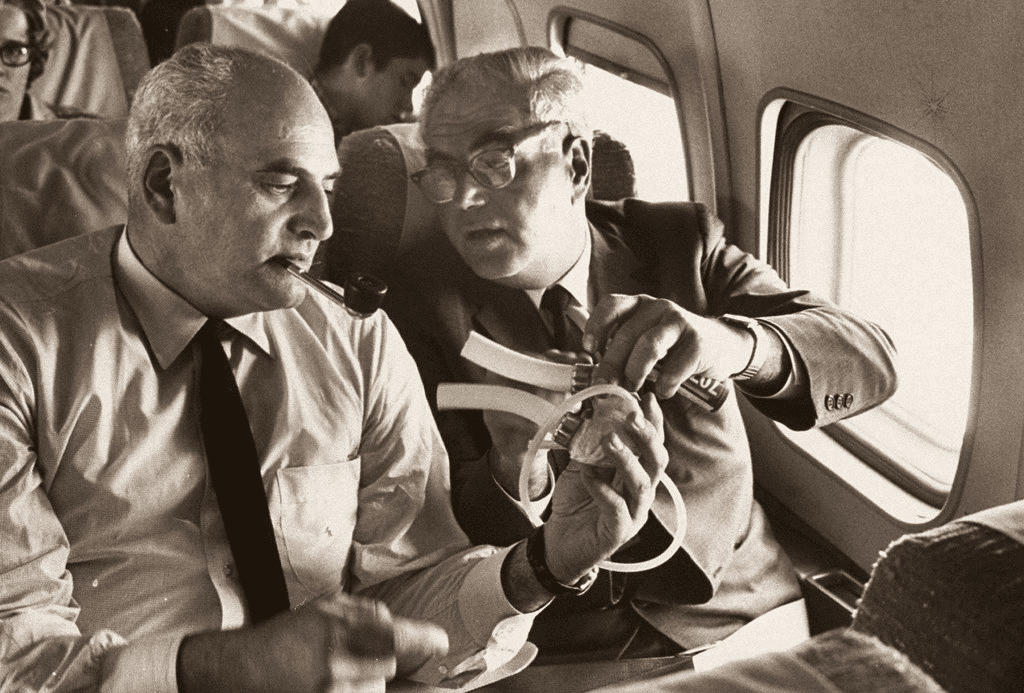
It was Adrian Kantrowitz who invented the intra-aortic balloon pump. Imagine ‘a long, narrow gas tube (6 inches in diameter) that resembles a balloon and is connected to the aorta’. The device was constantly inflated and deflated, which allowed the heart to pump blood, reducing the strain on this important human organ. Thanks to his invention, more than 3 million people have been able to get the device installed since the 1980s.
Thanks to the collaboration of Kantrowitz and General Electric in 1962, the pacemaker was invented. The mitral valve in the heart was created in 1951.
In 1961, Adrian helped patients who had paralysis of the limbs move them using an electronic device.
Kantrowitz also developed an artificial left ventricle of the heart, an oxygen generator for the cardiovascular system and a device that helped empty the bladder of paralyzed people.
In 1958, his device, which was called the heart-lung, was used during heart surgery on a 6-year-old boy who had a congenital pathology (a 1-inch hole between the chambers of the heart).
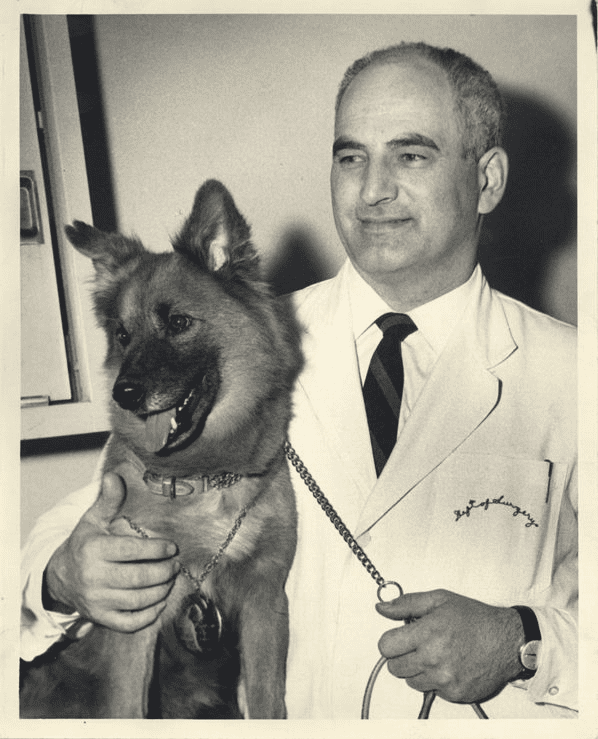
Since 1959, Adrian has been working on heart transplant surgery. He first implanted a heart amplifier in a dog.
While working at Mammonides Medical Center in Brooklyn and Sinai Hospital in Detroit, he implanted a cardiac pacemaker in a healthy dog as an experiment. This was the first example of supporting the heart with the help of technical devices. In 1967, he performed the first transplant in the United States (not in the world). To ensure the success of this operation, Adrian transplanted hearts into puppies for 5 years, until he dared to perform the operation on a human. He transplanted hearts into 411 dogs.
Heart transplant
On June 29, 1966, Kantrowitz decided to transplant the heart of a child who was only 18 days old. The baby needed a new heart. Adrian’s team found a donor who was suffering from anencephaly. His parents agreed for their child to donate the heart. Due to disputes with the hospital administration, Kantrowitz had to wait for the donor’s heart to die, not the brain. This made all the efforts futile.
On December 6, 1967, at Maimonides Medical Center, a team of surgeons led by Kantrowitz performed the world’s first attempt at a human-to-human heart transplant. The entire operation took about an hour. The heart was cooled. After it was artificially heated, it was shocked with an electric current and started beating. The patient lived for more than 6 hours. Kantrowitz said it was a fail because the child did not survive.
Personal life and awards
Adrian Kantrowitz was married. His wife, Jean, was his assistant for many years in a company that manufactured medical devices that improved heart function. He had three children who became doctors in the fields of cardiology, radiology and neurosurgery. He also had 9 grandchildren.
In 2001, Dr. Kantrowitz received an award for his achievements in the field of cardiology. The award was presented by the American Society for Artificial Internal Organs. In the same year, he managed to launch a device on the market that helps sick patients move and even exercise.
Adrian died in 2008 at the age of 95. Some time before that, he had a heart attack.
Adrian Kantrowitz, who was born in the Bronx, was an outstanding doctor and innovator in the field of medicine.