

You don’t have to go to Rio de Janeiro to see a fiery Latin American carnival. A spectacular Dominican parade is held annually in all five boroughs of New York City, immersing you in a vibrant and atmospheric Caribbean world. In this article, on bronxski.com, we’ll tell you about the history of this celebration and how it’s held in the Bronx.
A Major Dominican Celebration in the U.S., and New York in Particular
Dominicans are the fastest-growing Latino group in New York City, surpassing even Mexicans and Puerto Ricans. At the same time, they are a nation that deeply honors and preserves its traditions and customs. It’s no surprise, then, that the concept of a National Dominican Parade is well-known and quite widespread in an America far from the Dominican Republic. It’s held annually in places like New Jersey, Paterson, Boston, Lawrence, Philadelphia, and Providence.
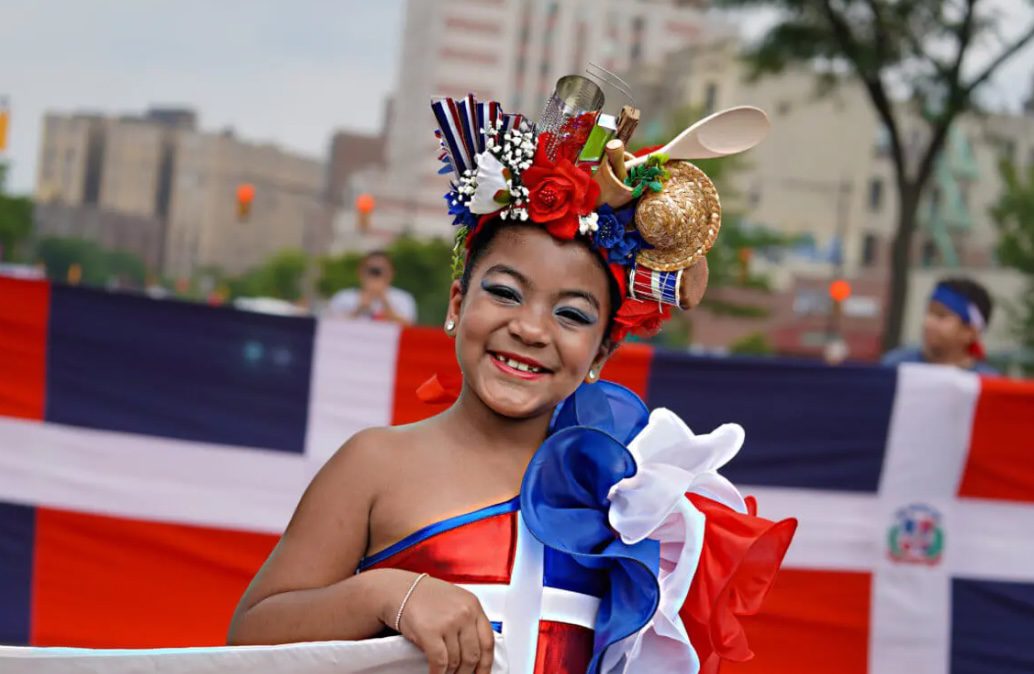
The first such parade in New York was held in 1982 in the Washington Heights neighborhood of Manhattan. A small Dominican community gathered to support their national cultural traditions. An impromptu concert was held, and people socialized and got to know each other. Afterward, many of them felt a rush of energy and warmth from immersing themselves in their native culture. There were no social networks back then, but people were able to form a community and agreed on an annual format for Dominican gatherings. With each passing year, more participants joined the event, and it quickly grew beyond Manhattan. Soon, all five boroughs of New York City began to see their own distinct Dominican communities emerge.
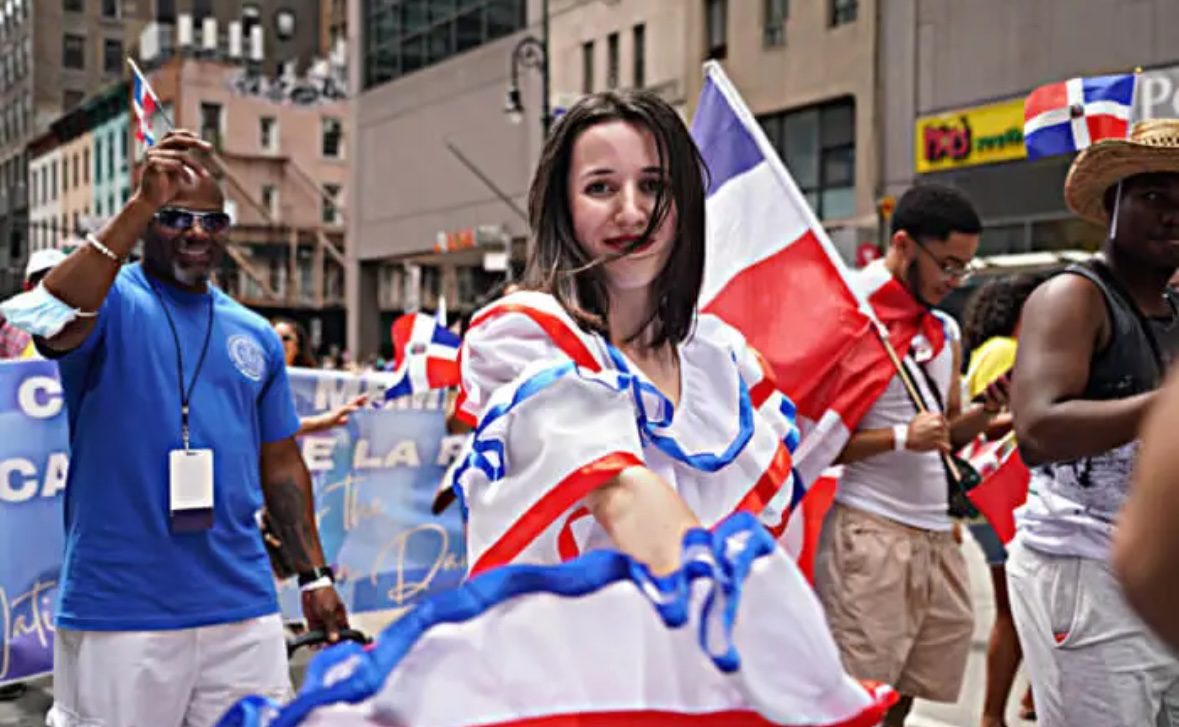
From a modest concert of folk songs, it evolved into a magnificent, vibrant parade that at times resembled a carnival. Colorful costumes, loud music, crowds, children’s laughter, and passionate dancing. It’s safe to say Dominicans know how to throw a real party. For a long time now, this festival has no longer been exclusively Dominican. It’s joyfully attended by members of other Latino groups, as well as by African and Native Americans. For some, it’s a source of nostalgic, heartfelt emotions, while for others, it’s a chance to enjoy the incredible festive atmosphere and get a closer look at another culture.
A series of events is held leading up to National Dominican Day. These events include celebrations of Dominican heritage in the Bronx, Queens, Brooklyn, and Manhattan. A separate organization, Dominican Day Parade, Inc., was even founded. Its mission is to raise awareness of the contributions of the Dominican community in the U.S. and around the world, as well as to celebrate the richness of Dominican culture and traditions.
Each year, Dominican Day Parade, Inc. presents a parade theme. For example, in 2015, the theme was “Education and Economic Empowerment,” which was a response to the lack of resources for young people seeking an education. So, the parade addressed the issue of education and drew the attention of the government and influential community organizations to the problem. In 2022, the theme was “Empowering Dominican Heritage,” and 2023 was dedicated to Dominican history. So it’s not just a fun festival with dancing and costumes. It’s actually an opportunity for the Dominican community to make its voice heard and to talk about its needs and problems.
The Symbolism of the Date
The Dominican Republic is a country that officially defined its borders only in 1936, even though it had been independent since 1867. For many years, fierce battles were fought on its territory. Spain and Haiti competed for the right to own these lands, but they failed to consider the fact that Dominicans were a free people who always wanted to rule their own country.
The struggle against the Spanish regime in the mid-19th century is known as the War of Restoration (La Guerra de la Restauracion). In 1844, the Dominican Republic gained independence from Haiti, becoming a sovereign state. But then the country was led by General Pedro Santana, who sought to re-annex the Republic to Spain. He had great influence and many followers, and he succeeded. On March 18, 1861, the Spanish flag was flown over the Dominican Republic. But the majority of the population dreamed of independence, internal discontent was growing, and rebels were ready to fight. So, the War of Restoration began on August 16, 1863, under the command of General Gregorio Luperón. After hellish battles and courageous fighting, the Dominican Republic finally became free from Spanish rule on March 3, 1865.
This is why the date that marked the beginning of that decisive war, which made Dominicans free and independent, was chosen for the Dominican celebration in New York. The organizers announce the date of the parade every year. It rarely falls exactly on August 16 but is always set for a weekend in the first half of the last summer month.
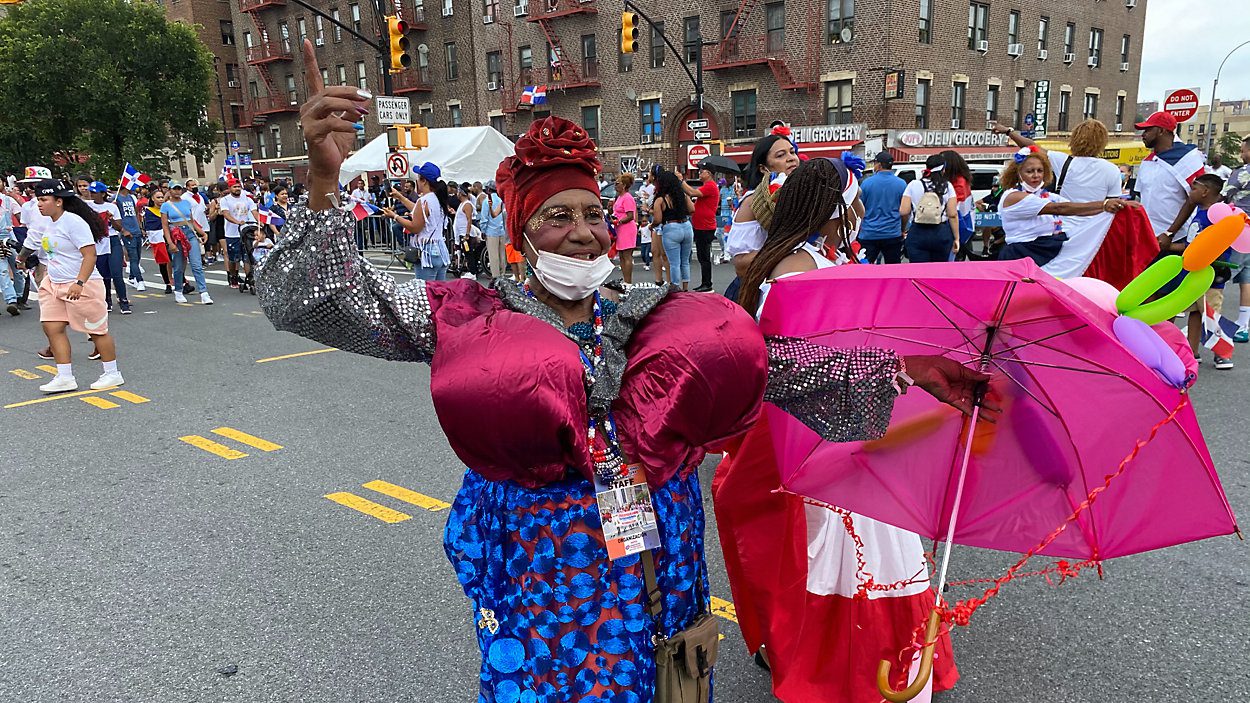
An Amazing Scale and a Spectacular Show
The Dominican parade takes place in all five boroughs of New York City. The largest and most spectacular is in Manhattan, which usually starts at noon on Sixth Avenue and moves from 37th Street to 55th Street. On average, this parade gathers about 400,000 participants annually, including spectators.
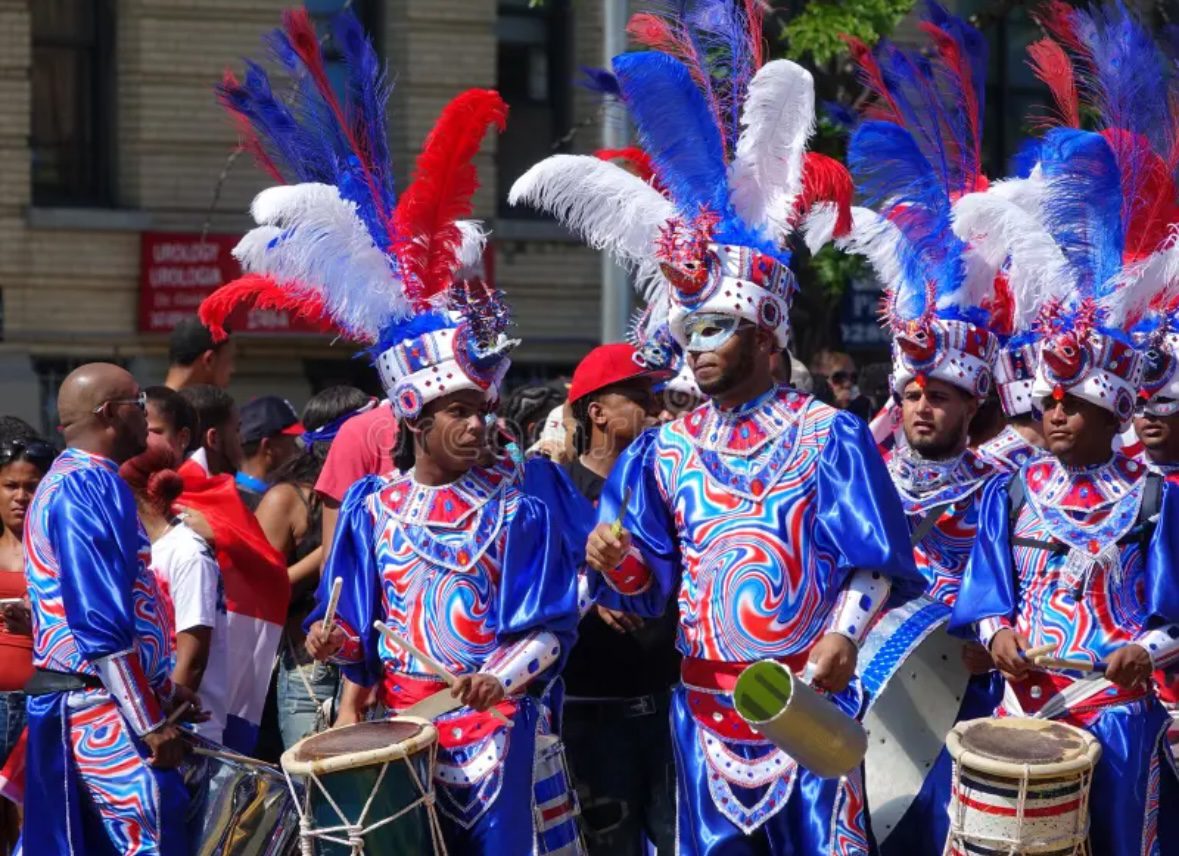
The Dominican celebration in New York is a wonderful opportunity to get acquainted with Caribbean culture and enjoy a real Dominican party. Just imagine: over 40 carnival floats and more than 10,000 costumed participants. Even if you’re not a fan of Latin American music, you won’t be able to stay away from these infectious, hot rhythms. The entire parade is accompanied by Dominican folk music, modern pop, salsa, and, of course, merengue—the signature sound of the Dominican Republic.
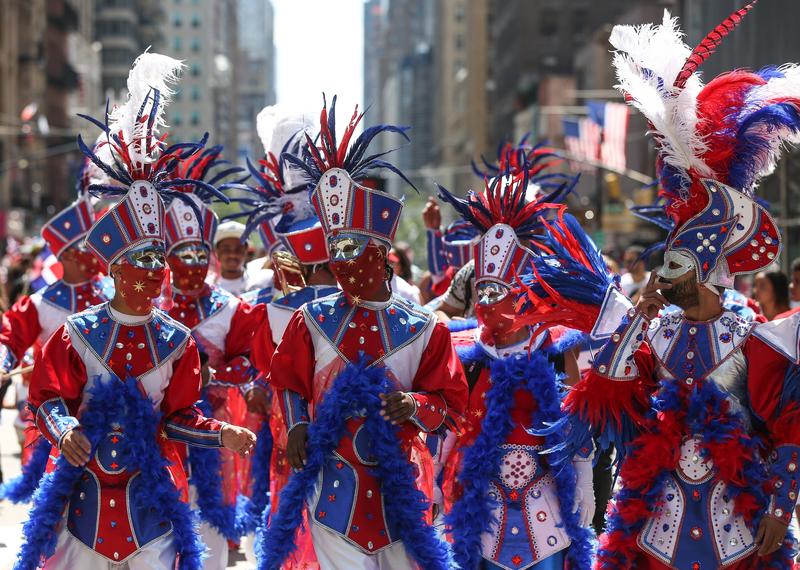
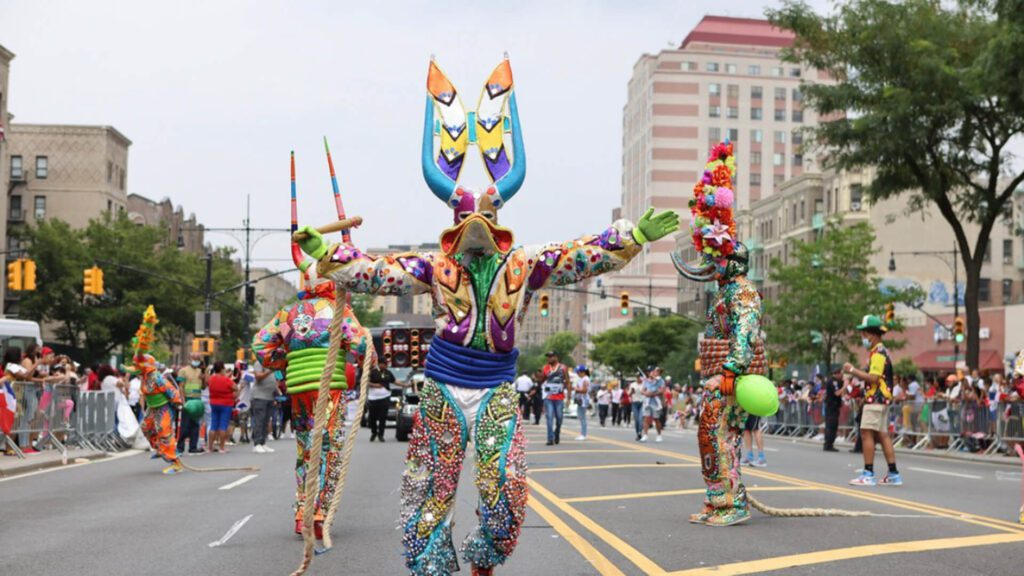
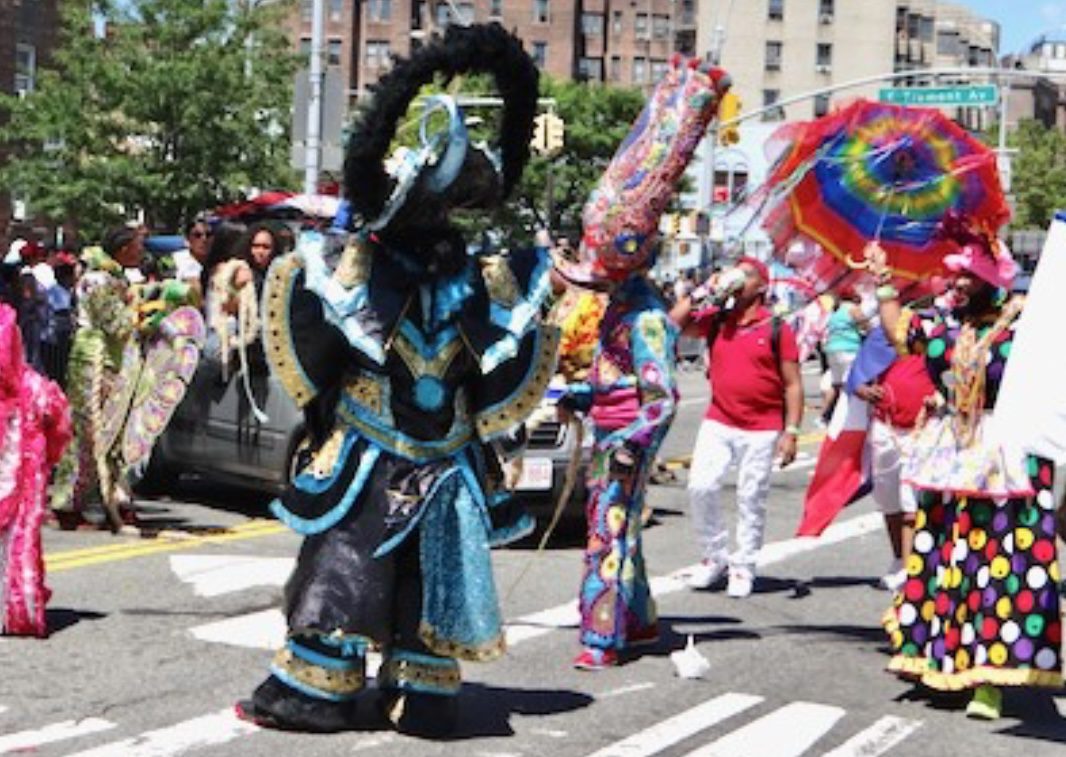
The costumes of the most dedicated participants are particularly impressive. They admit that they prepare for the parade months in advance and meticulously work on every detail: bright fabrics, patterns and ornaments, plush feathers, and glitter. The procession always includes symbolic characters. One of them is the “Diablo Cojuelo” (the limping devil), who is a central figure of the Dominican carnival. By tradition, the “Diablos cojuelos” may lightly hit anyone with his demonic balloons, so you have to be careful not to stand too close. Another typical character is “Roba la Gallina” (the chicken thief). According to legend, she stole chickens from farms, so her essential attribute is a makeshift chicken in her hand. You can also see Dominican beauty queens in exquisite outfits and artists of various genres.
The Dominican Parade in the Bronx
In the Bronx, the Dominican parade is known as La Gran Parada Dominicana De El Bronx. Every summer, Dominicans and other Latinos gather on the borough’s main street—the Grand Concourse—to show their Caribbean pride. The only time organizers were forced to cancel the event was in 2020, at the height of the global pandemic.
In addition to the traditional parade with costumes and music, which is no different from those in Brooklyn, Queens, and Manhattan, the Bronx always has its own separate program. This program is primarily focused on the selection of the Parade Queen and includes several other interesting events.
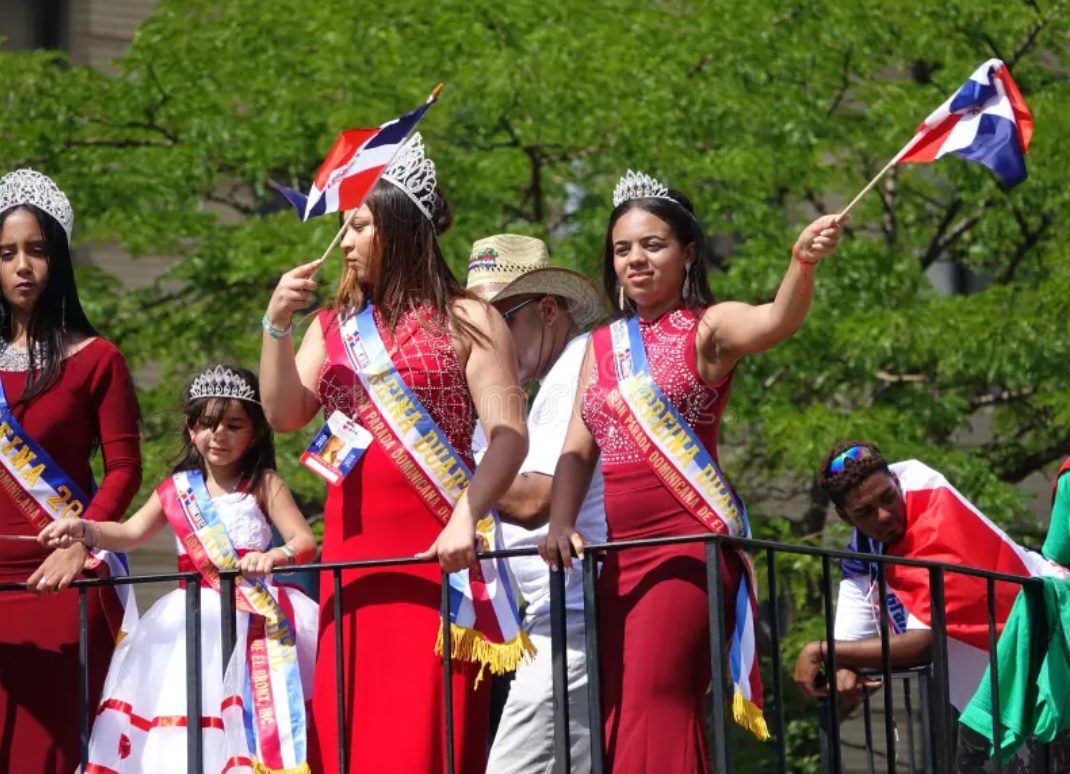
For example, the 2024 Dominican program included:
- March—the first round of selections for the Parade Queen;
- April—the second round of the Queen selection, featuring public appearances, a dance competition, and modeling;
- May—the third and final round;
- June—a fashion show by Cynthia Matos at the Bronx Dominican Parade Hall;
- July—a game at Yankee Stadium between the legendary Yankees and Boston Red Sox.
A few days before the parade, a large Gala dinner was held at Marina Del Rey Caterers in Throggs Neck, where prominent members of the Dominican community were present.
The culmination of the entire Dominican program was a festive parade that brought together residents and visitors on the Bronx’s main street and gave everyone an incredibly vibrant experience.