

The New York Botanical Garden in the Bronx hosts this annual winter exhibition. It blends a festive atmosphere with the enchanting world of model railroading. Miniature trains wind through meticulously crafted replicas of New York City’s most iconic buildings and other landmarks. The entire display is arranged like a tiny city, with trains chugging among trees, bridges, and landscapes, creating a magical scene for visitors. Find out more about the Holiday Train Show on bronxski.com
Founding the Tradition
It all began in 1991 when Kentucky-based landscape architect Paul Busse founded Applied Imagination, a studio that combined his passion for miniature railways, natural materials, and art. The company’s unique specialty became creating botanical models of architectural structures from bark, acorns, leaves, twigs, and grapevines. Just one year later, his visions came to life at the New York Botanical Garden, where the first Holiday Train Show debuted in 1992.
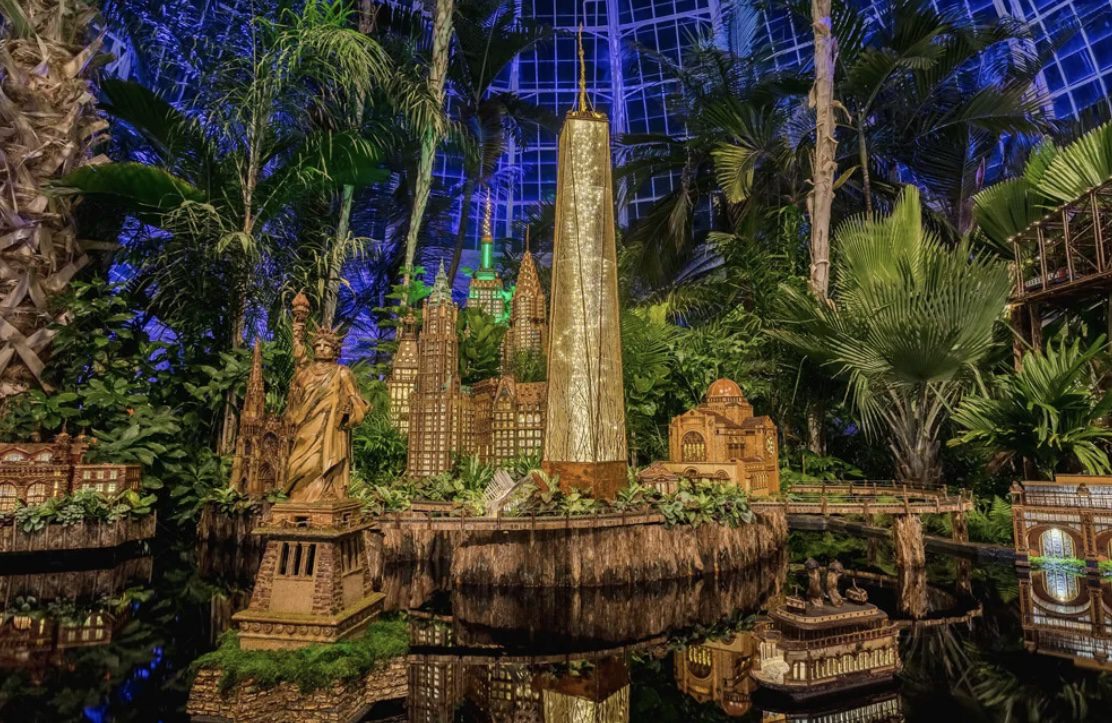
This enchanting world, where toy trains navigate among living plants and miniature replicas of famous New York structures, quickly captured the public’s imagination. Over the years, the exhibition grew, transforming into a true botanical city. For instance, in 2003, a miniature city hall was added to the display after then-Mayor Michael Bloomberg pointed out its absence. The model was crafted from cattails and honeysuckle—natural materials that skillfully mimicked architectural details.
After Paul was diagnosed with Parkinson’s disease, his daughter, Laura Busse Dolan, took over the company in 2017. She continues her father’s legacy, leading a team of artists from Alexandria, Kentucky, who daily seek inspiration directly in the forest, gathering materials for new exhibits. The artists see the potential in every natural material to recreate architectural beauty—for example, a common vine becomes a cathedral column, and fallen leaves form the roof of a train station.
Laura admits that modeling modern buildings is much more challenging, especially when it comes to glass skyscrapers. One of the biggest challenges was the One World Trade Center. To convey its spirit and form, the team used acrylic panels and birch branches, which appear to grow from the walls, symbolizing New York’s rebirth after the tragedy of 9/11.
Uniqueness and Special Features of the Event
For over 30 years, the Holiday Train Show has been an integral part of New York’s holiday season, attracting thousands of visitors of all generations.
Over 200 models of iconic buildings and structures, including the Brooklyn Bridge, Yankee Stadium, the Statue of Liberty, Grand Central Terminal, and even Edgar Allan Poe’s cottage, create a genuine botanical dream city.
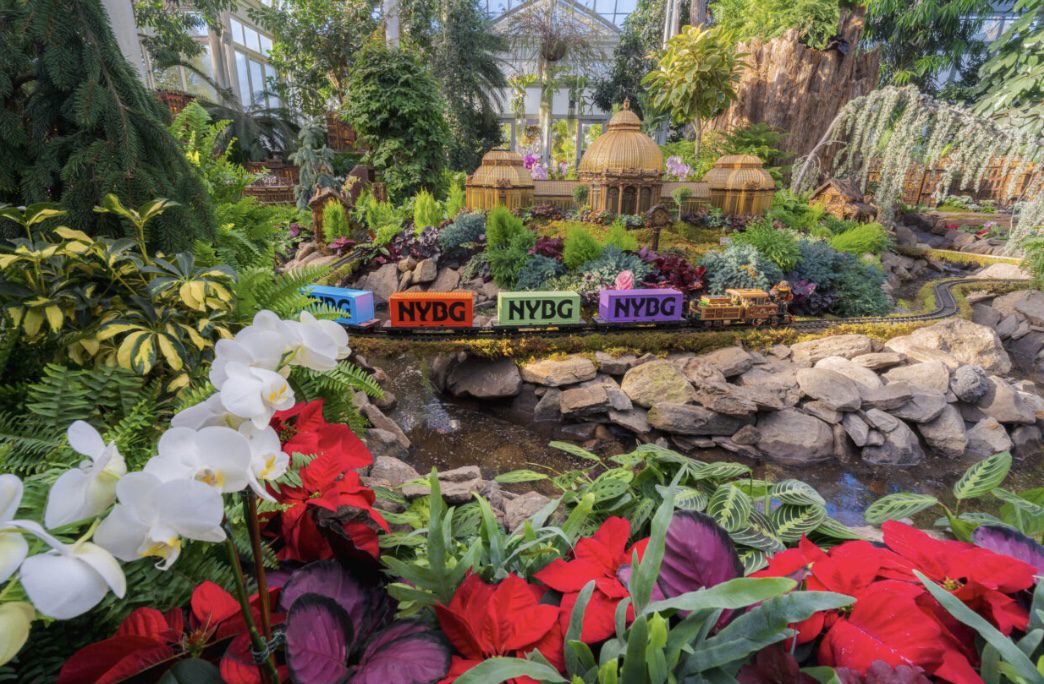
More than 25 large-scale trains—from 19th-century steam engines to modern electric trains—traverse these magical landscapes. They pass through tunnels, speed across valleys and elevated tracks, and climb bridges that soar directly over spectators’ heads, creating an aerial show effect.
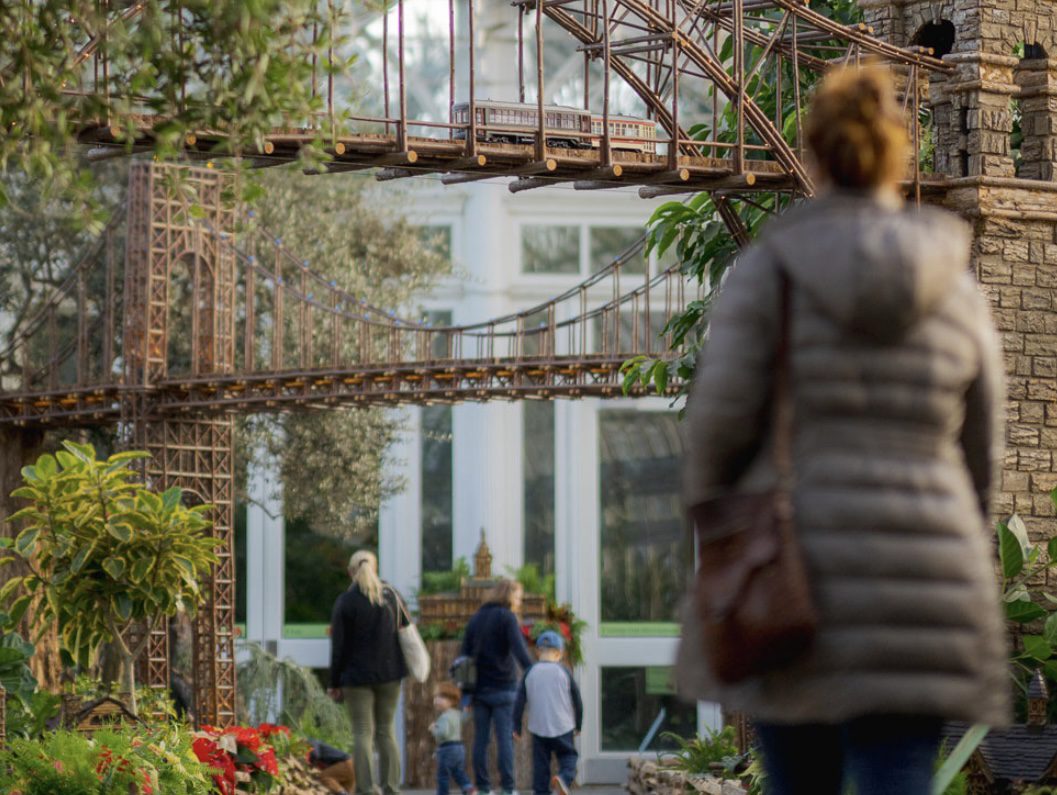
In the 2020s, the exhibition expanded to include an outdoor space—a lawn near the Haupt Conservatory, featuring a captivating section with mountainous landscapes and outdoor trains. This offers a unique opportunity to enjoy the blend of nature, engineering, and art on both real and miniature scales.
The exhibition runs annually from November to mid-January. It’s wonderful for both children and adults, with interactive zones where young conductors can launch train cars. Special Sensory Friendly Mornings are also offered for those who prefer a calmer, less noisy environment.
The educational goal of the Holiday Train Show is to inspire learning about architecture, design, botany, and the city’s history.
Despite technical complexities, the Holiday Train Show continues to surprise with new details each year, preserving its atmosphere as a magical town where architecture, nature, and imagination merge into one. It’s not just an exhibition; it’s a true ode to creativity, remembrance, and hope.

Jewish Exhibition
In addition to New York’s prominent landmarks, the exhibition features a collection of Jewish-related exhibits. These include:
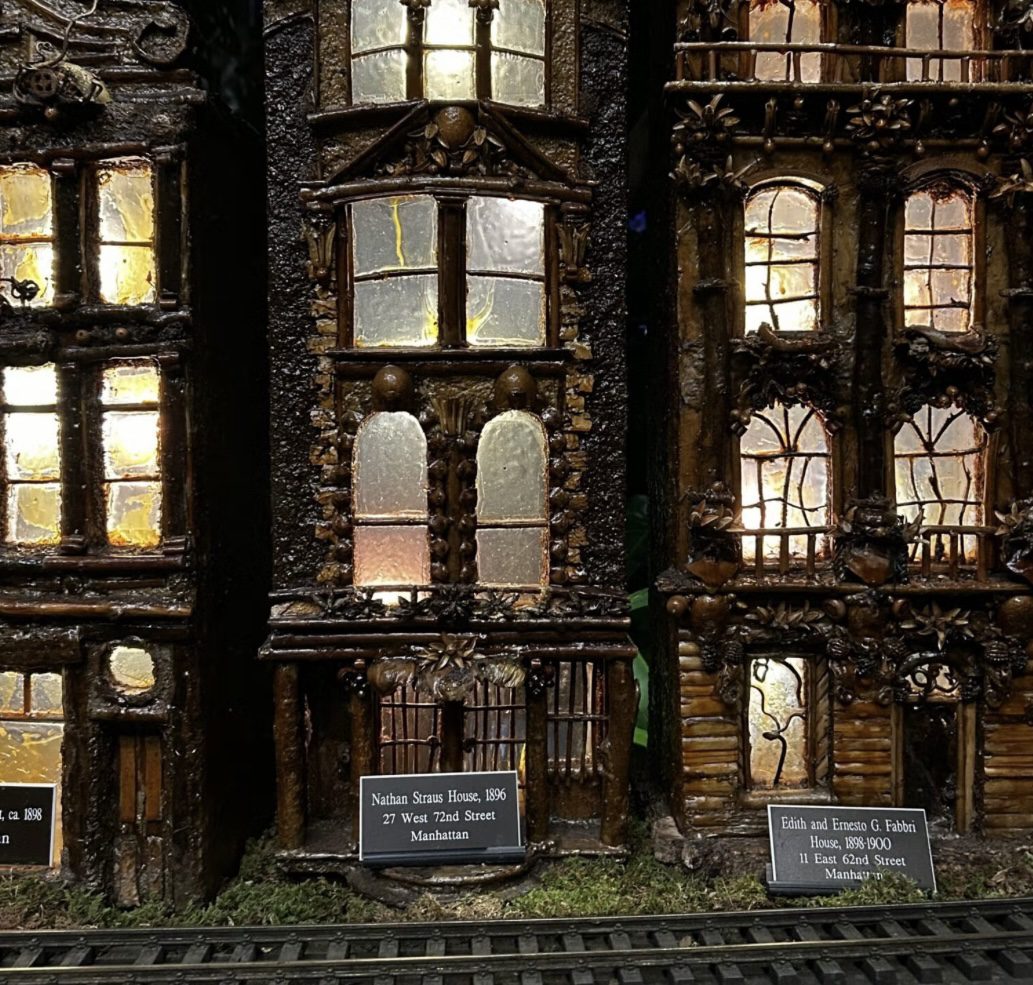
- Nathan Straus House (1896).
This elegant mansion on West 72nd Street belonged to Nathan Straus, co-owner of Abraham & Straus and Macy’s department stores, as well as a passionate philanthropist and early Zionist. He and his wife, Lina, traveled to Palestine multiple times, and the modern Israeli city of Netanya is named in his honor.
- Naumburg Bandshell (1923).
Located in the heart of Central Park, this graceful neoclassical structure was a gift from merchant and philanthropist Elkan Naumburg, a German-Jewish immigrant who pioneered the idea of free outdoor concerts for all New Yorkers. In the exhibition, the bandshell appears as a miniature musical gem among trees and moss, reminding us that culture unites.
- Solomon R. Guggenheim Museum (1959).
An icon of modern art and architecture, the Guggenheim Museum, designed by Frank Lloyd Wright, also has Jewish roots. Its founder, Solomon Guggenheim, was a wealthy mining magnate of Jewish descent and a passionate collector of avant-garde art. In miniature, the building looks like a work of natural fantasy. Its rounded forms are crafted from mushrooms, bark, and lichens, mimicking the legendary concrete facade.
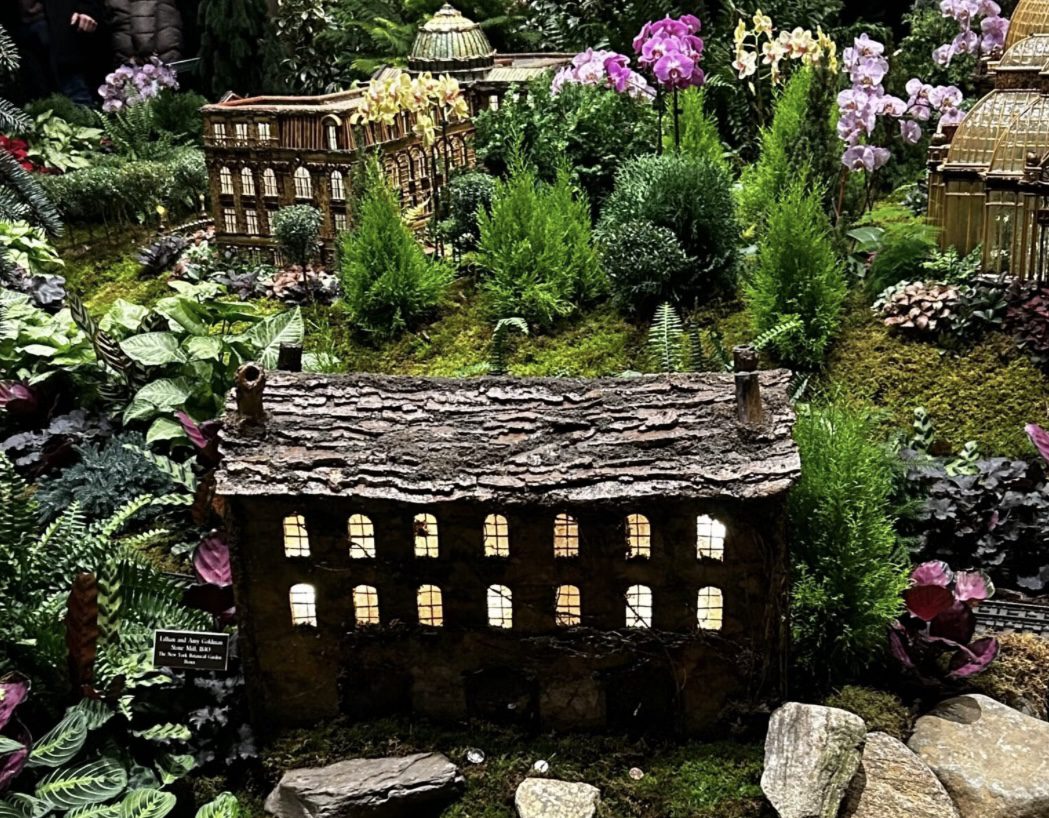
- Lillian and Amy Goldman Stone Mill (1840).
Located directly on the Botanical Garden grounds, this historic mill was restored thanks to the support of the Goldman family. Lillian Goldman was a prominent Jewish philanthropist who supported numerous educational and environmental initiatives. Her daughter, Amy Goldman, became a champion of heirloom plant varieties. This mill symbolizes intergenerational philanthropy, deeply rooted in Jewish tradition.
- The Jewish Museum (originally the Felix Warburg House, 1909).
Situated on Museum Mile in the former mansion of Felix Warburg, The Jewish Museum is a center for Jewish art and history outside of Israel. Warburg, a banker, philanthropist, and leader of Jewish organizations, left behind a cultural legacy that lives on today. In the exhibition, this Gothic-style house stands out with its intricate facade detailing and turrets, crafted from bark, flowers, and seed pods.
The 2025-2026 Exhibition
In 2025, the Holiday Train Show celebrates its 34th year while also marking the 60th anniversary of New York City’s Landmarks Preservation Law.
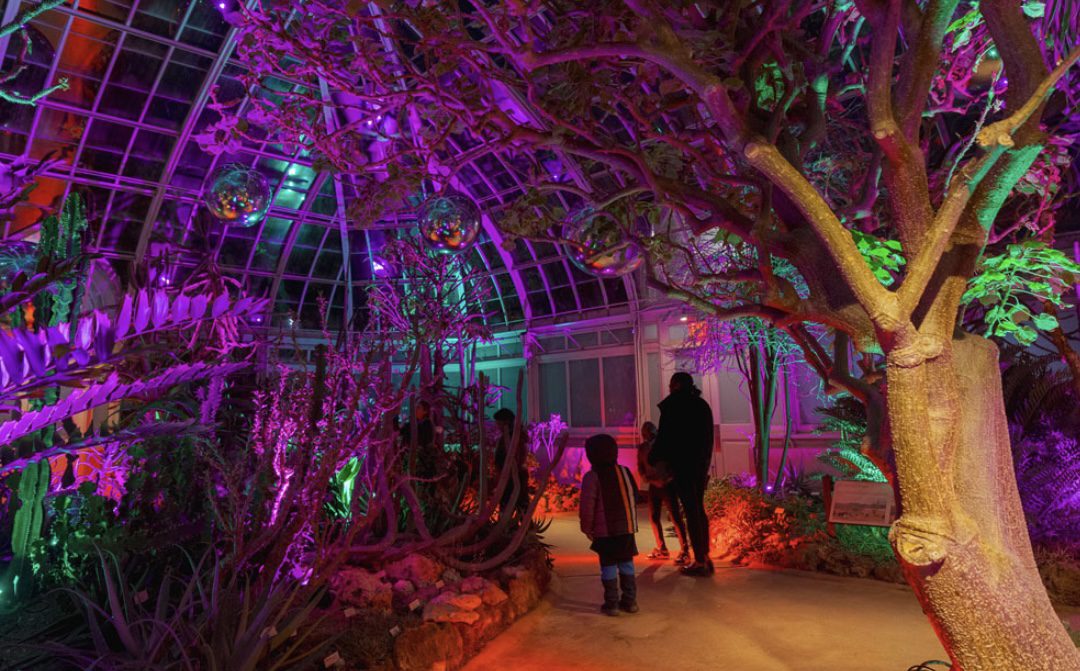
In 2025, the show will be complemented by a nighttime program: festive illumination, trains sparkling in the dark, live musical performances, hot beverages, gingerbread cookies, and a magical atmosphere for the entire family.

Overall, the New York Botanical Garden has planned a series of grand exhibitions through 2027 that will combine nature, architecture, history, and contemporary art.
In addition to the Holiday Train Show, the following are also announced:
- Mr. Flower Fantastic and “Flower Power” (2026).
In 2026, the Garden will present a large-scale installation by Mr. Flower Fantastic, an anonymous artist who works with living flowers in the genre of street art. His tribute to New York is a floral poetry that blossoms outdoors. Concurrently, the “Flower Power” exhibition will launch, inspired by the vibrant aesthetics and protest spirit of the 1960s. This will be not only a visual feast but also a social statement about peace, freedom, and the power of beauty.
- KAWS Exhibition (2027).
In 2027, the Botanical Garden will delve into a different aesthetic—the absorption of space by artist KAWS, known for combining pop culture, emotions, and monumental sculptures. His works will fill the pathways, galleries, conservatories, and lawns, creating an interactive dialogue between contemporary art and the natural environment.
The New York Botanical Garden continues to establish itself as a place where flowers and plants are a language, and culture is vibrant, multifaceted, and accessible. From a child’s fascination with models to profound artistic installations, everyone will find something to enjoy.