

Colin Powell was one of the most prominent American military and political figures, rising from the son of Jamaican immigrants in the South Bronx to the highest echelons of the U.S. government. His career spanned service in Vietnam, leadership of the Joint Chiefs of Staff, Operation Desert Storm, and serving as U.S. Secretary of State. In this article on bronxski.com, we explore the biography of Colin Powell, his connection to the Bronx, the origin of the “Powell Doctrine,” his military and diplomatic triumphs, and his controversial speech before the UN Security Council ahead of the Iraq War.
From the Slums of the South Bronx to the Military Elite: The Early Career of a Jamaican Immigrant’s Son
Colin Luther Powell was born on April 5, 1937, in Harlem, New York. His parents, Luther and Maud Powell, were Jamaican immigrants with African and Scottish roots. His father worked as a clerk, and his mother was a seamstress. When Colin was six years old, the family moved to the South Bronx.
During his youth, Powell worked part-time at a local children’s furniture store owned by Jack Sixer and Lou Kirschner, two Jewish shopkeepers. While working there, young Colin quickly picked up Yiddish, allowing him to converse fluently with customers who didn’t speak English. That skill stayed with him throughout his life: in 1993, during a visit to Jerusalem, Powell pleasantly surprised Israeli Prime Minister Yitzhak Shamir by speaking to him in fluent Yiddish.
After graduating from Morris High School in 1954, Colin had no clear plans for the future. He enrolled at the City College of New York (CCNY), where he earned a bachelor’s degree in geology. It was there that he discovered his true calling after joining the Reserve Officers’ Training Corps (ROTC). As he later recalled, the military was a place where a young Black man could find genuine opportunities for advancement based on merit rather than skin color. Upon graduation in 1958, Powell was commissioned as a second lieutenant in the U.S. Army.
Baptism by Fire in Vietnam: Heroism, Injury, and Disillusionment with U.S. Military Policy
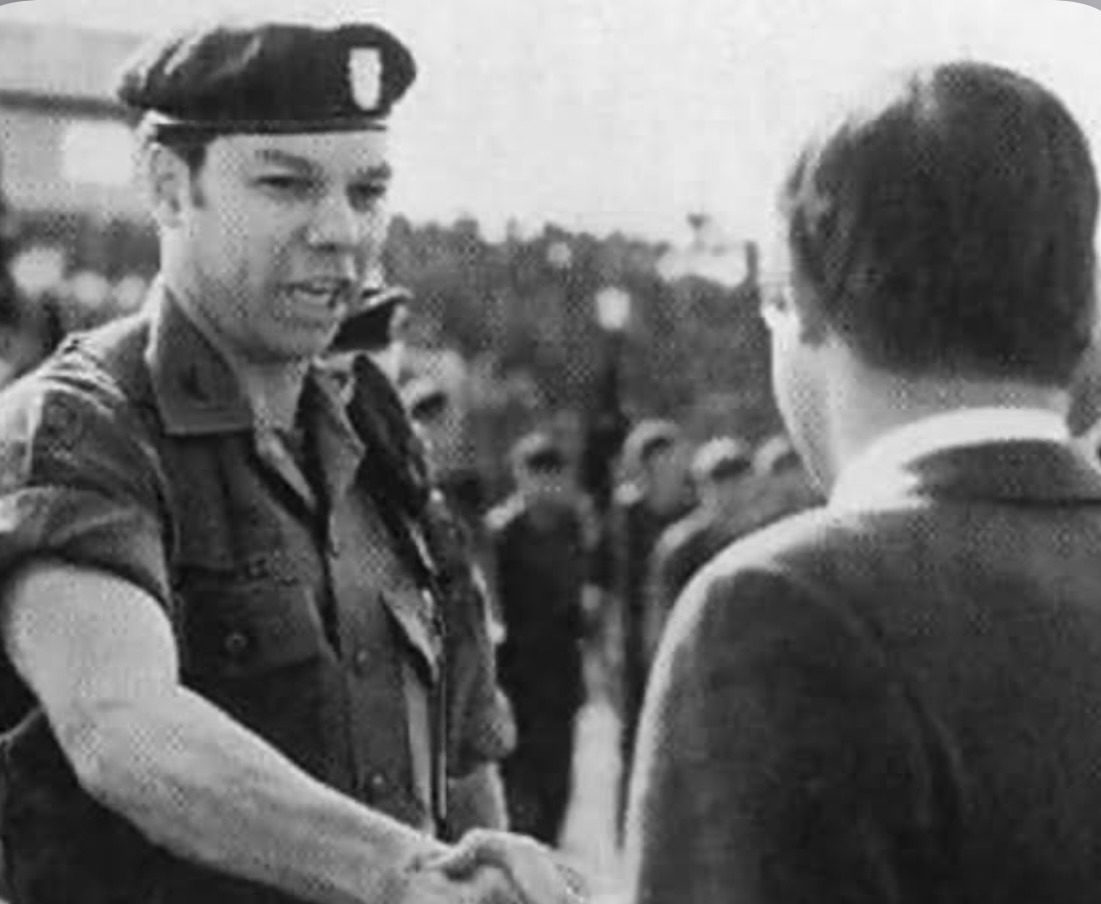
After completing basic training and serving in West Germany, Powell was deployed to Vietnam, where he served two tours of duty. This experience served as his true baptism by fire. During his first tour in 1963, he served as a military advisor and suffered a leg injury from a punji stick trap, earning him the Purple Heart medal.
Returning to Vietnam in 1968 as a major, Powell faced another harrowing ordeal. The helicopter he was traveling in crashed. Despite his injuries, Colin single-handedly pulled three fellow soldiers from the burning wreckage, including Major General Charles Gettys. For this heroic act, he was awarded the Soldier’s Medal.
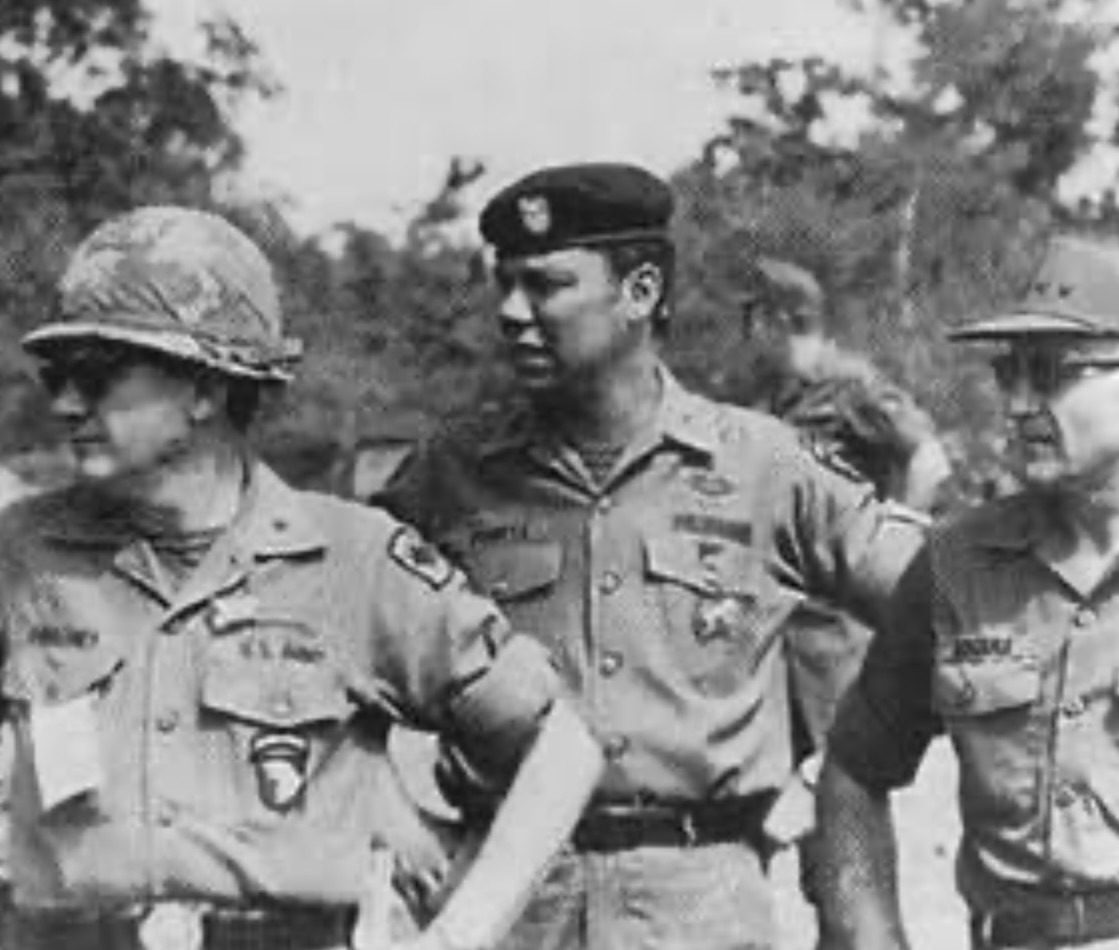
The Vietnam War fundamentally reshaped his worldview. Powell witnessed firsthand the devastating impact of lacking a clear political strategy and sound military planning. It was during this time that he developed deep doubts about entangling the military in conflicts without a well-defined objective—doubts that would later become the foundation of his renowned military doctrine.
“I can’t recall a single discussion among my fellow officers about the merits of this war during my entire time in Vietnam,” Powell later recalled, criticizing the political leadership of that era for waging a war without public backing.
A Meteoric Rise in Washington: The First Black Chairman of the Joint Chiefs of Staff
Colin Powell’s career in Washington gained momentum in the early 1970s. In 1971, he earned an MBA from George Washington University, and the following year, he was selected for the prestigious White House Fellows program. Assigned to the Office of Management and Budget, Powell crossed paths with Caspar Weinberger and Frank Carlucci—two influential figures who would play key roles in shaping his political trajectory.
All the while, his military career continued to thrive. Powell rose from battalion commander in South Korea to key staff positions, establishing himself as one of America’s foremost military strategists. In 1987, President Ronald Reagan appointed him Deputy National Security Advisor. A year later, Powell assumed the top job, serving as National Security Advisor until 1989.
The First African American to Lead the U.S. Armed Forces
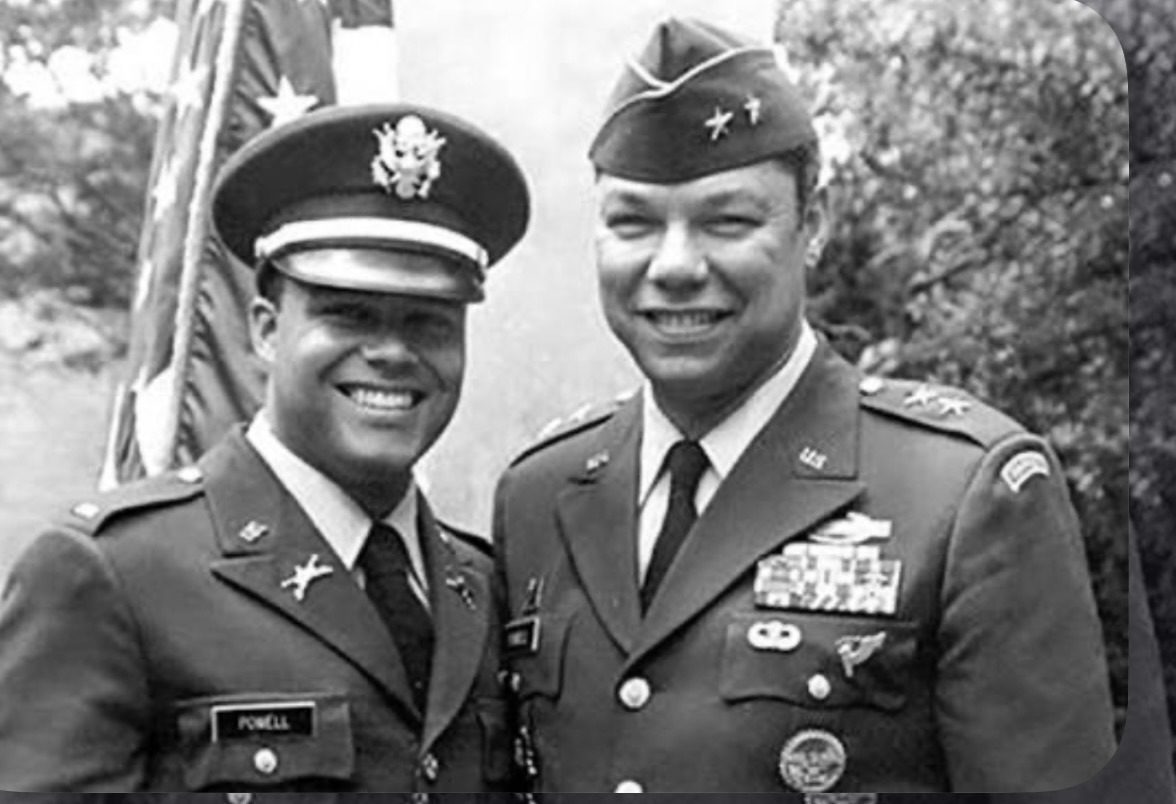
In 1989, President George H.W. Bush made a historic appointment. The 52-year-old Colin Powell was named Chairman of the Joint Chiefs of Staff—the principal military advisor to the President of the United States.
He became the youngest officer ever to hold the post, as well as the first African Caribbean American to head the Joint Chiefs of Staff. For the military and American society alike, it was a symbolic breakthrough: a Jamaican immigrant’s son from the South Bronx had reached the pinnacle of the nation’s military hierarchy.
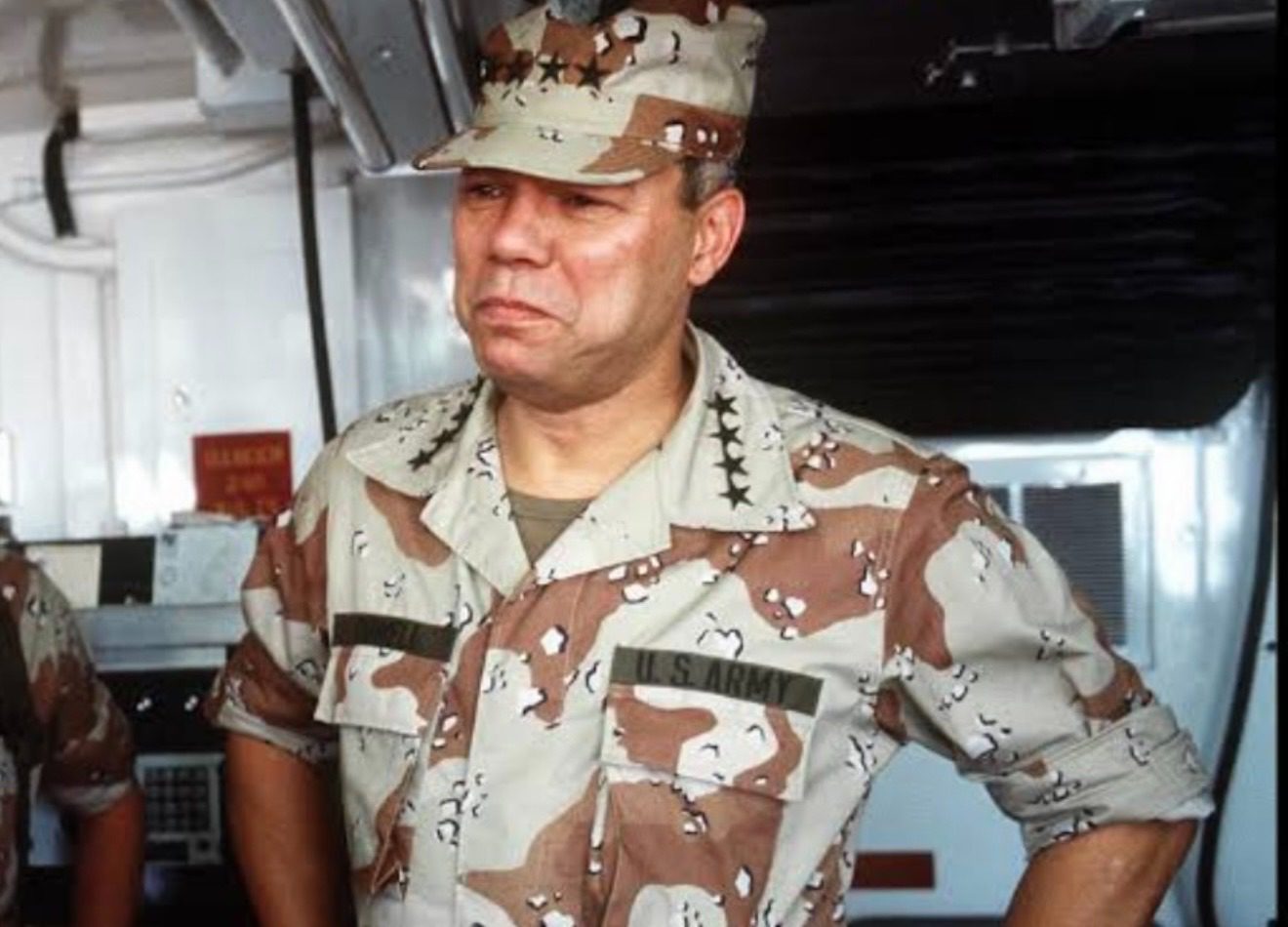
Yet his greatest challenges still lay ahead. During Powell’s tenure, the U.S. responded to 28 major crises requiring military action. Two major operations stood out above the rest: the 1989 invasion of Panama and the 1991 Persian Gulf War.
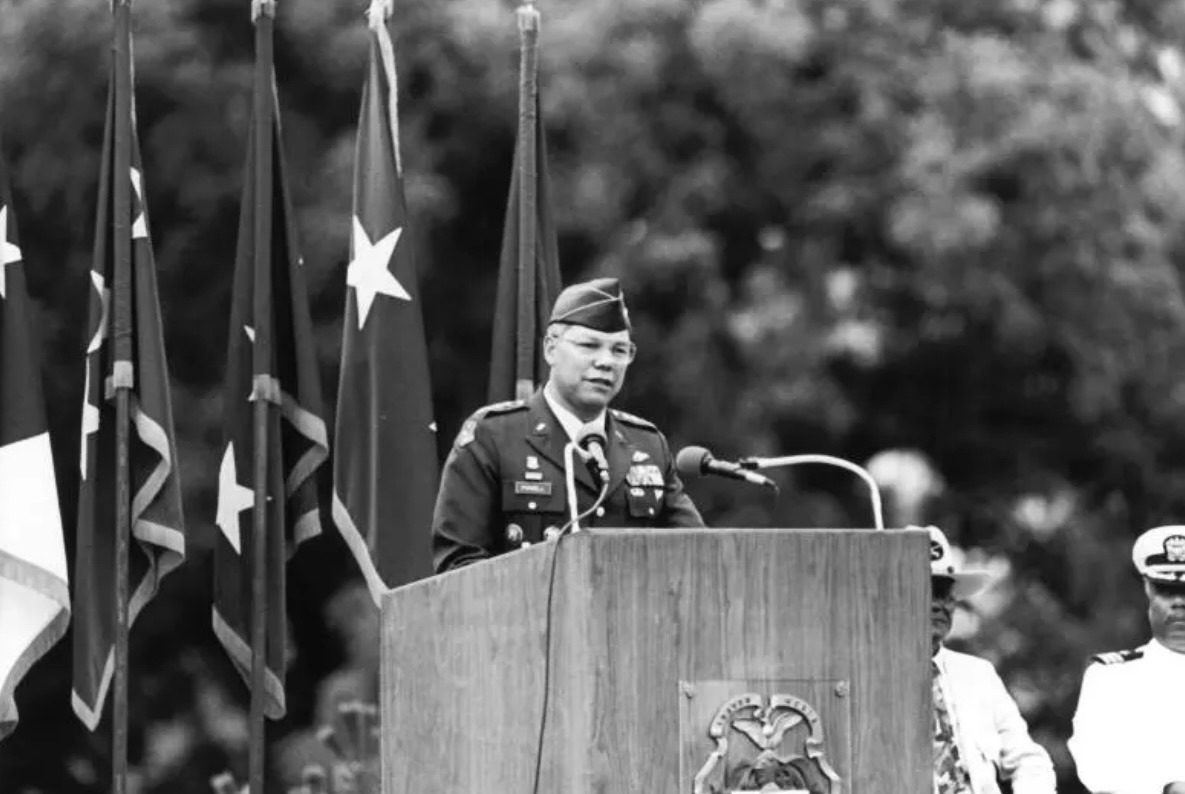
Operation Just Cause was launched to oust Panamanian dictator Manuel Noriega. Two years later, American forces confronted Saddam Hussein’s military following Iraq’s invasion of Kuwait. Code-named Operation Desert Storm, the conflict catapulted Powell into one of the most famous American generals of his generation.
How the “Powell Doctrine” Was Born
The Persian Gulf War provided the ultimate testing ground for the principles that would come to be known as the “Powell Doctrine.”
Before launching any military operation, the general advocated pausing to answer several crucial questions: Does the situation directly threaten vital U.S. national security interests? Is there a clear, achievable objective? Have the potential costs, risks, and financial burdens been fully evaluated?
Equally critical was determining whether all diplomatic and non-military options had truly been exhausted. Crucially, Powell insisted on having a clear exit strategy before committing troops: knowing how the conflict would end was just as vital as planning its execution.
Finally, there was the question of political backing: Was the American public prepared to support the decision, and did the operation enjoy broad international backing?
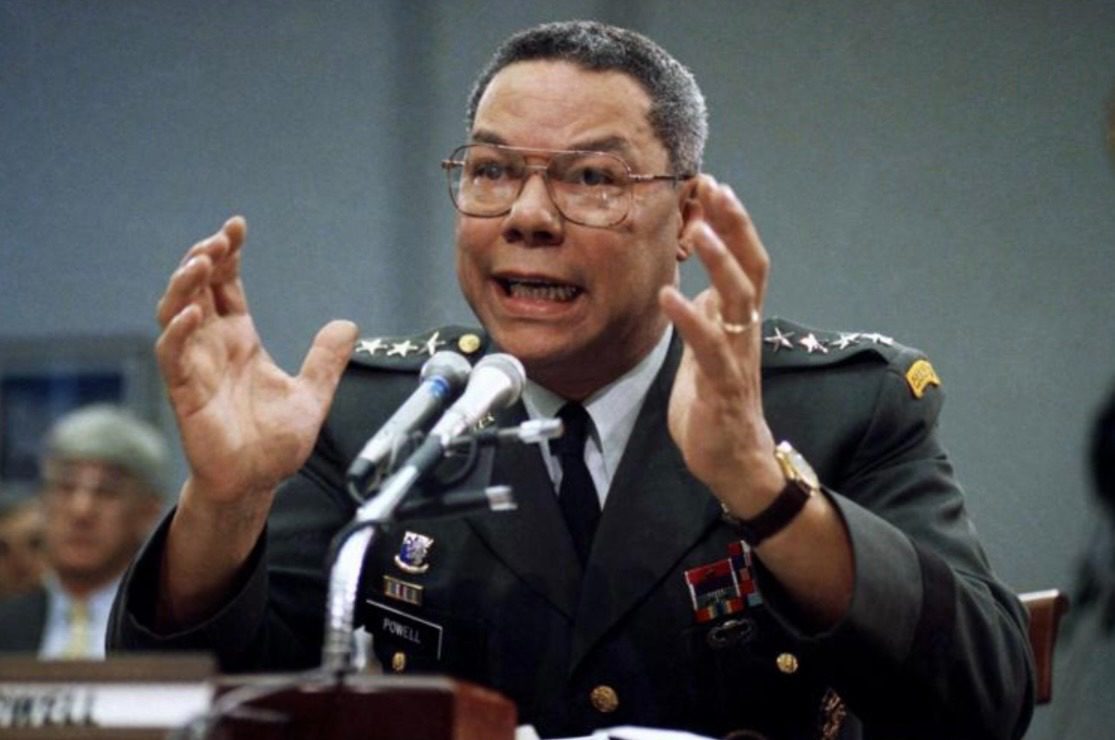
In essence, the “Powell Doctrine” established a strict threshold for policymakers: if a nation cannot clearly articulate why it is going to war, how it intends to win, and when it plans to exit, it shouldn’t engage at all.
In the Persian Gulf, Powell put his philosophy into practice. The campaign ended swiftly with the liberation of Kuwait, turning Colin Powell into a household name far beyond military circles and a national symbol of victory.
U.S. Secretary of State and a Fatal Misstep: How a Vial at the UN Changed History and the Iraq War
Following his retirement from the military in 1993, Powell enjoyed immense popularity. He was urged to run for President of the United States in both 1996 and 2000, but he declined. However, after George W. Bush’s victory, he accepted the nomination for Secretary of State, making history once again as the first African American to hold the office.
His diplomatic tenure was dramatically upended by the terrorist attacks of September 11, 2001. Powell played a central role in assembling a global anti-terrorism coalition. Yet his ultimate test came during the run-up to the 2003 Iraq War. Initially, Powell opposed invading Iraq, arguing that containing Saddam Hussein was sufficient. Under pressure from the Bush administration, however, he agreed to present the administration’s case before the UN Security Council.
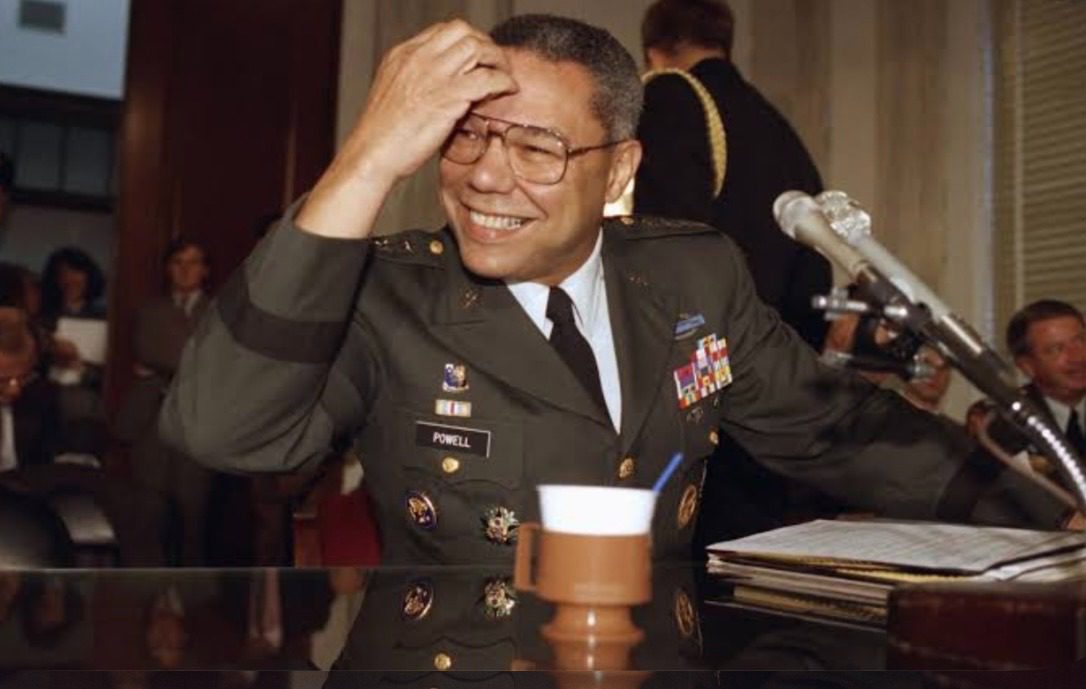
On February 5, 2003, Colin Powell delivered the most defining and painful speech of his career. Holding a small vial containing white powder to symbolize anthrax, he argued to the world that Iraq possessed weapons of mass destruction.
It later emerged that the CIA intelligence was deeply flawed, and certain facts had been fabricated. No biological weapons were ever found in Iraq. The presentation dealt a devastating blow to Powell’s personal credibility and damaged U.S. standing worldwide. Powell later referred to the address as a permanent “blot” on his record.
“It was far from my first failure, but it was one of my most significant failures. It will be a prominent paragraph in my obituary,” the former Secretary of State candidly admitted.
In November 2004, Powell announced his resignation as Secretary of State.
Life After Politics: Parting Ways with the GOP, Supporting Democrats, and Public Service
After stepping down from public office, Colin Powell dedicated himself to philanthropy and civic work. As early as 1997, he had founded America’s Promise, a non-profit organization focused on supporting young people from diverse socioeconomic backgrounds.
Politically, Powell—a longtime Republican—grew increasingly disillusioned with the direction of his party, stating that it was drifting too far to the right. He endorsed Democrat Barack Obama in 2008, Hillary Clinton in 2016, and Joe Biden in 2020. Following the storming of the U.S. Capitol by Donald Trump supporters in January 2021, Powell publicly declared that he could no longer call himself a Republican.
Colin Powell passed away on October 18, 2021, at the age of 84 at Walter Reed National Military Medical Center due to complications from COVID-19. He is survived by his wife of nearly 60 years, Alma, and their three children: Michael, Linda, and Annemarie.
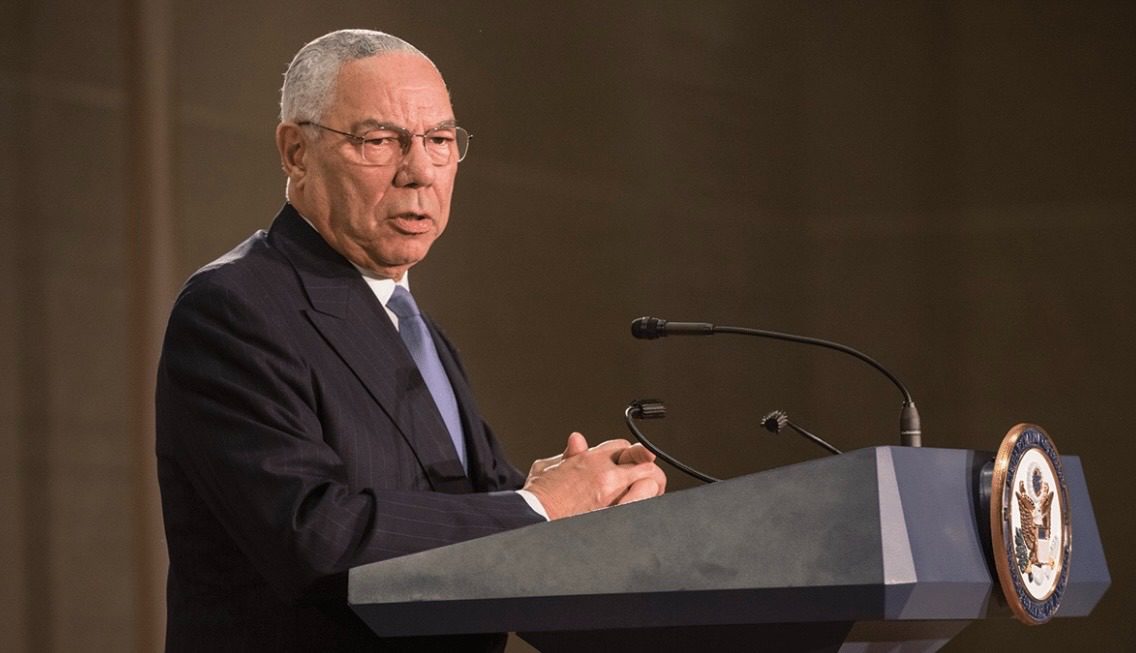
Colin Powell was a singular figure in American history—a soldier-statesman who remained steadfast in his commitment to duty and integrity. The kid from the Bronx proved that talent, discipline, and leadership can shape the course of history. His “Powell Doctrine” remains a staple in military academies, while his misstep at the UN serves as a stark reminder to leaders about intelligence oversight and the cost of foreign intervention. Throughout his life, Powell acted with a profound sense of duty to his country, standing as a model of professionalism and honor.