

Arthur R. Kantrowitz was a renowned American physicist of Jewish descent, born in the Bronx. His groundbreaking work in high-temperature gases, nuclear fusion, and fluid dynamics propelled humanity forward in space exploration. He was also the brother of Adrian Kantrowitz, a well-known transplant surgeon and researcher. Learn more about the life and contributions of physicist Arthur Kantrowitz with bronxski.com.
Early Life
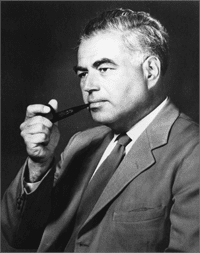
As noted by nytimes, Arthur Kantrowitz, like his brother Adrian, was born in the Bronx to a family of four children. Their mother was a clothing designer, and their father was a physician who managed a medical institution. Unlike Adrian, who followed their father’s career path, Arthur carved out his own as a physicist. Born in 1913, just before World War I, Arthur was five years older than his brother.
At age 11, Arthur left a private school in Manhattan due to his refusal to pledge adherence to strict discipline. He continued his education at DeWitt Clinton High School in the Bronx. As a child, he helped (or perhaps was helped by) his brother to assemble an electrocardiograph from spare parts—a device used to measure the heart’s electrical activity.
University Education and Work at NASA’s Predecessor
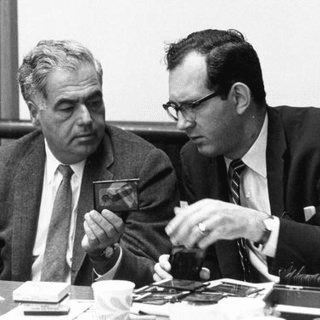
Arthur pursued higher education at Columbia University to fulfill his ambition of becoming a scientist. As he later recounted, he aspired to be a physicist even before fully understanding what the term meant.
In 1936, he earned his bachelor’s and master’s degrees in physics from Columbia University and joined the National Advisory Committee for Aeronautics (NACA), the precursor to NASA, at Langley Field in Virginia. In 1938, Arthur and his supervisor, Eastman N. Jacobs, attempted a groundbreaking experiment on nuclear fusion. The goal was to replicate the Sun’s energy source—fusion of hydrogen into helium—by heating hydrogen with radio waves while compressing it with a magnetic field. This marked the beginnings of the Manhattan Project.
Conducted in secrecy, their work was nicknamed the “diffusion inhibitor,” and experiments were carried out at night. Although the project failed before its underlying issues could be understood, Arthur remained inspired to make scientific breakthroughs.
After leaving NACA, Arthur wrote a seminal paper on gas dynamics, earning a Ph.D. in 1947. Concurrently, he joined Cornell University, where he worked until 1956.
Transition to Avco Everett and Groundbreaking Innovations
Why did Arthur leave a stable academic career at Cornell for industrial research at Avco Everett? It was driven by his desire to innovate and a serendipitous conversation during a Thanksgiving dinner with Victor Emanuel, the head of Avco Corporation. Emanuel discussed the challenge of designing rockets to withstand the extreme temperatures of reentry into the Earth’s atmosphere. Arthur accepted the challenge, confident he could develop a solution in six months.
At Avco Everett, Arthur created a wind tunnel capable of generating gas temperatures up to a million degrees, simulating the conditions rockets face during reentry. This breakthrough led to the development of heat shields for rockets, with the first successful application on the Thor-Able rocket in 1958. This achievement secured Arthur’s reputation as a visionary in aerospace research.
Additional Innovations
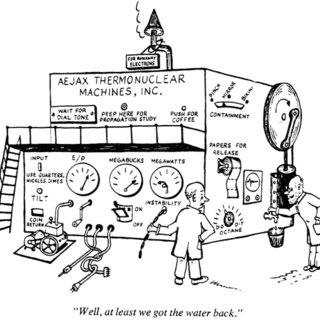
At Avco Everett, Arthur also conducted pioneering studies on electrified hot gases, or plasma. In 1959, his team confirmed a hypothesis by British scientist Thomas Gold that solar magnetic storms could send waves of charged particles to Earth, causing magnetic disturbances.
He further explored methods to generate electricity from jets of hot gas and developed powerful lasers. Recalling his childhood collaboration with Adrian, Arthur also designed an intra-aortic balloon pump to assist the heart by inflating and deflating within the femoral artery—a device he later used himself.
In 1978, Arthur left Avco after a 22-year tenure as vice president and director of the corporation’s research division. He joined Dartmouth College, where he advocated for the establishment of a scientific court to address contentious issues like pesticide use and nuclear energy. Arthur also contributed to research on supersonic diffusers and compressors, invented a full-energy variometer for aircraft, and developed supersonic molecular beam sources. He conducted groundbreaking experiments visualizing the interaction of fresh blood with artificial surfaces under a microscope.
Personal Life
In 1943, Arthur married biochemist Rosalind Joseph. After an unsuccessful marriage, he later wed Lee Stewart, with whom he had three daughters and six grandchildren. Dr. Arthur Kantrowitz passed away at the age of 95 on November 29, 2008, in Manhattan.